
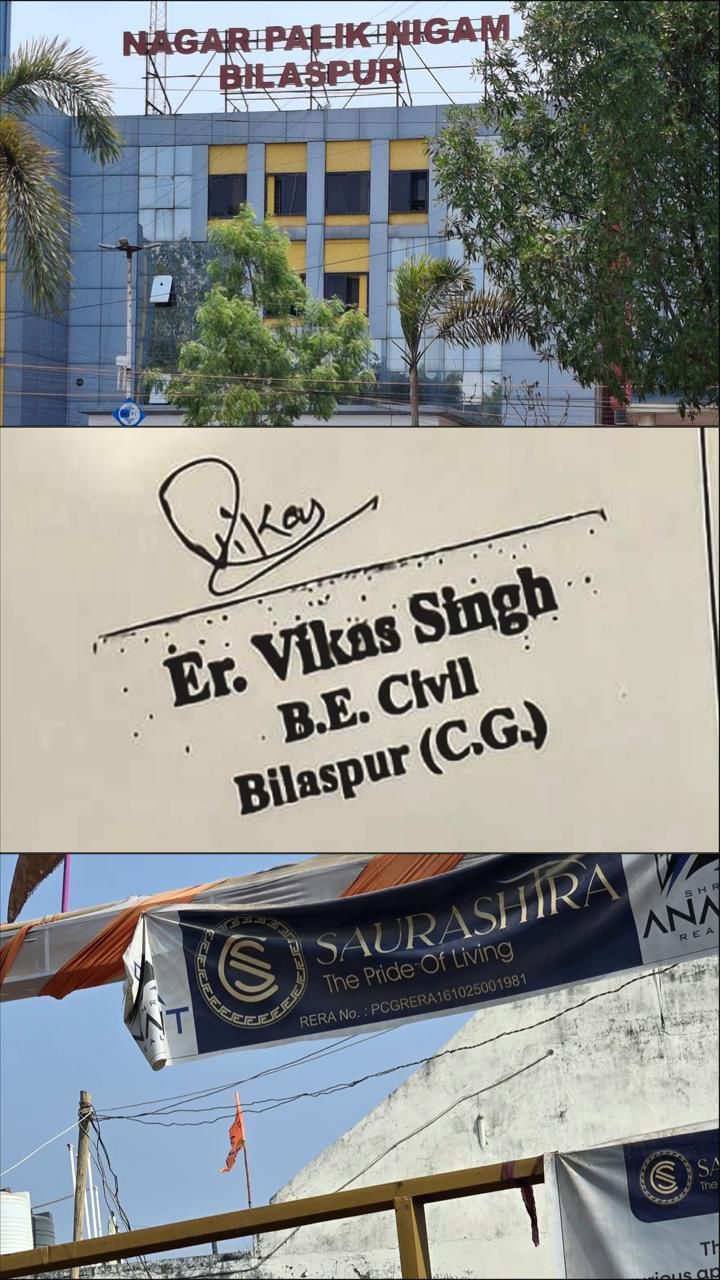
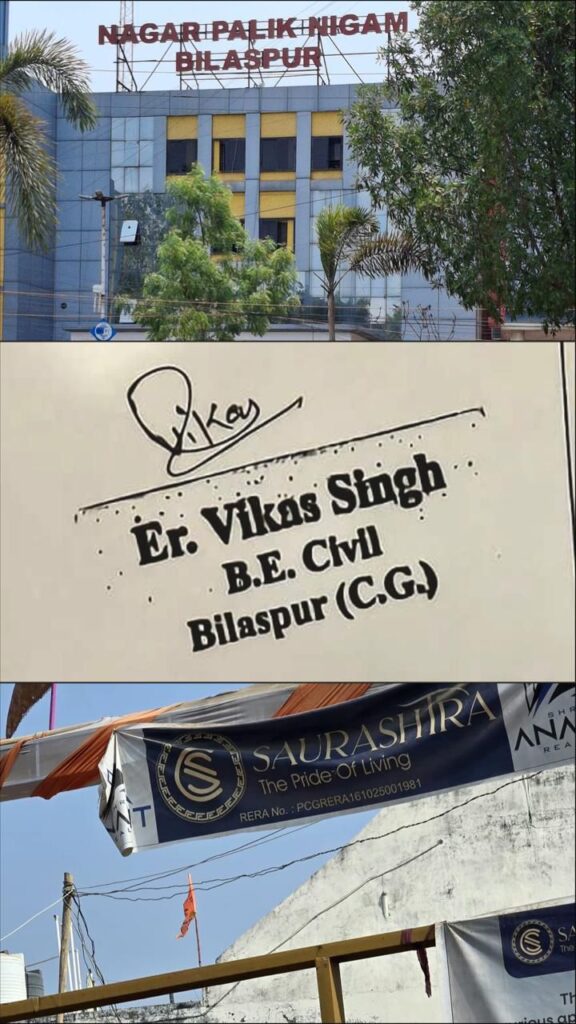

🔥 Project documents show major mismatch between area statement and approved plan
🔥 Hundreds of building plans allegedly cleared in name of ‘non-existent’ architect Vikash Singh
🔥 Questions raised over EWS land affidavit, bulk layout approvals
BILASPUR : Serious irregularities in building plan approvals have surfaced in Bilaspur, raising troubling questions over the functioning of the Municipal Corporation and the Town and Country Planning (TCP) Department.
Documents related to a residential project in the Agnya Nagar area suggest that construction permissions were allegedly granted in violation of prescribed planning norms. The controversy centres on a project proposed under the name M/s Anant Realty, where official records reportedly show glaring discrepancies between the area statement submitted by the developer and the building plan ultimately approved by authorities.
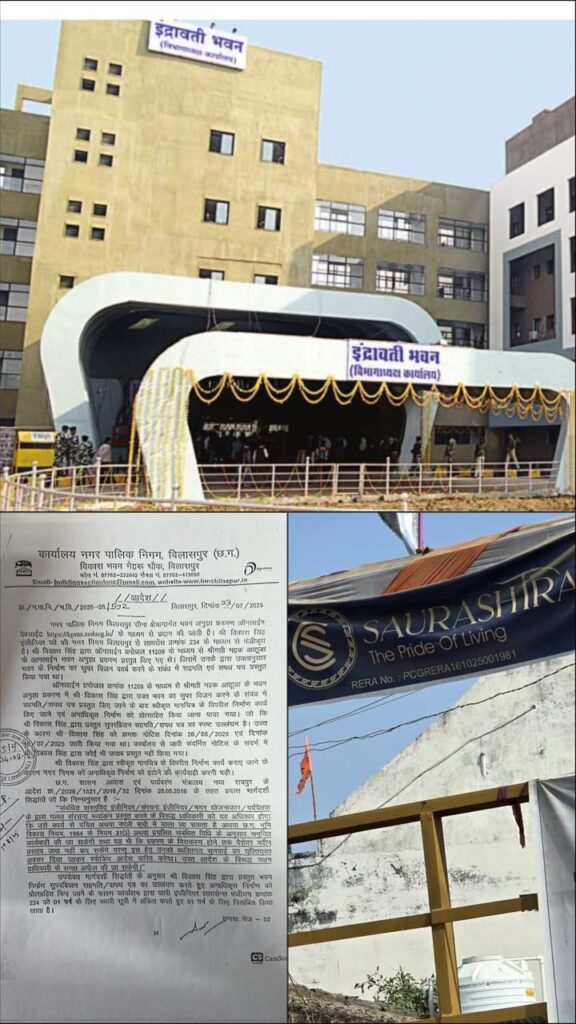
According to documents examined, the area statement for the project mentioned construction of 60 residential flats across four floors. However, the plan approved by the department reportedly allowed 90 flats and six floors, a deviation that urban planning experts say would normally trigger strict scrutiny during the approval process.
Specialists familiar with building regulations say such a wide gap between submitted specifications and approved drawings is unlikely to occur without detailed examination by the approving authority.
Another striking element in the case relates to the architect mentioned in the approval documents. The building plans were reportedly submitted under the name “Vikas Singh.” However, sources indicate that no registered architect or engineer with this name is traceable in official records of the city or in professional registries.
Subsequent verification of municipal files reportedly revealed that more than 400 building plans and over 150 layouts had been cleared earlier using the same name. The alleged use of a questionable identity for multiple approvals has raised concerns over the integrity of the approval mechanism.
The issue had earlier come into focus during action taken against illegal construction at Mahua Hotel near the Old Bus Stand. When documents relating to that property were examined, its building plan was also found to have been approved under the name “Vikas Singh.”
Following the discovery of irregularities, the Municipal Corporation reportedly suspended the licence associated with this name in July 2025. Meanwhile, information sought from professional architectural bodies indicated that no architect by this name was registered with them.
The controversy has also drawn attention to alleged irregularities in compliance with Economically Weaker Section (EWS) housing provisions, which are mandatory for large residential projects. The developer is said to have submitted an affidavit claiming that EWS housing units would be constructed on land located in village Tifra, Khasra No. 407/7.
However, scrutiny of revenue records has reportedly raised questions about whether the said land actually belongs to the developer.
Urban planning observers say that if the claim is found to be inaccurate, it could amount to misrepresentation before government authorities to secure development permission.
Further concerns have emerged over the speed with which certain layout approvals were reportedly processed. Sources claim that as many as 29 layout files were cleared on a single day, an occurrence that experts say would be highly unusual under normal administrative procedures.
Given the scale of approvals linked to the case, observers believe the financial dimension could also be significant. Municipal sources indicate that approval of residential layouts can involve fees ranging from tens of thousands to several lakh rupees depending on the size of the project.
With hundreds of plans and layouts reportedly cleared, the total financial implications could run into several crores, experts estimate.
The developments have triggered intense discussion within Bilaspur’s real estate sector as well as among civic groups, many of whom are now demanding a comprehensive and independent inquiry into the entire approval process.
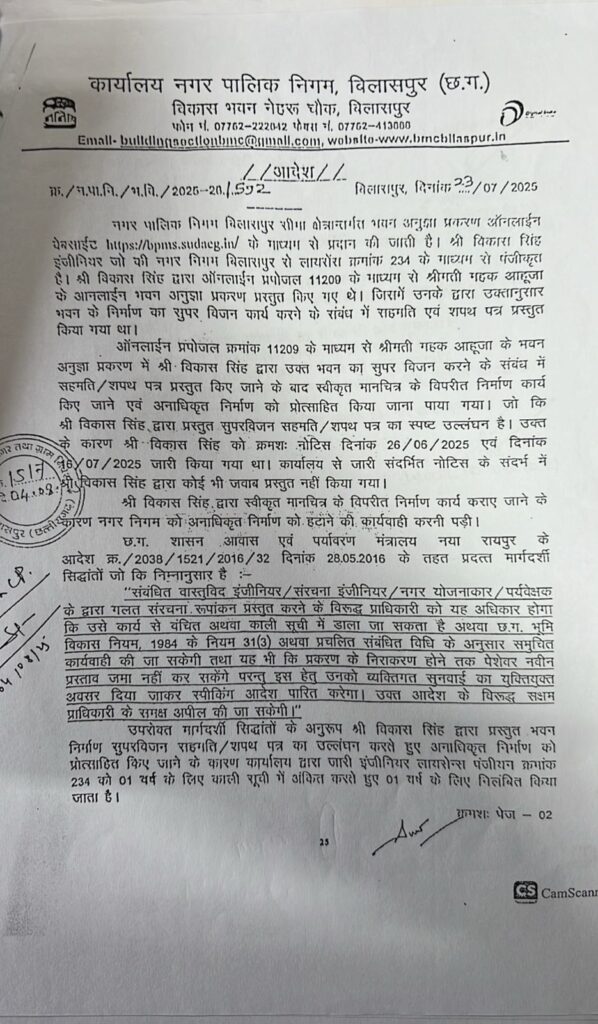
If the allegations are substantiated, the matter could lead to accountability proceedings against those responsible for granting approvals in violation of planning norms.
For now, the emerging revelations have cast a shadow over the credibility of the city’s urban planning system and raised a pressing question: how could such large-scale approvals pass through official channels without scrutiny?