
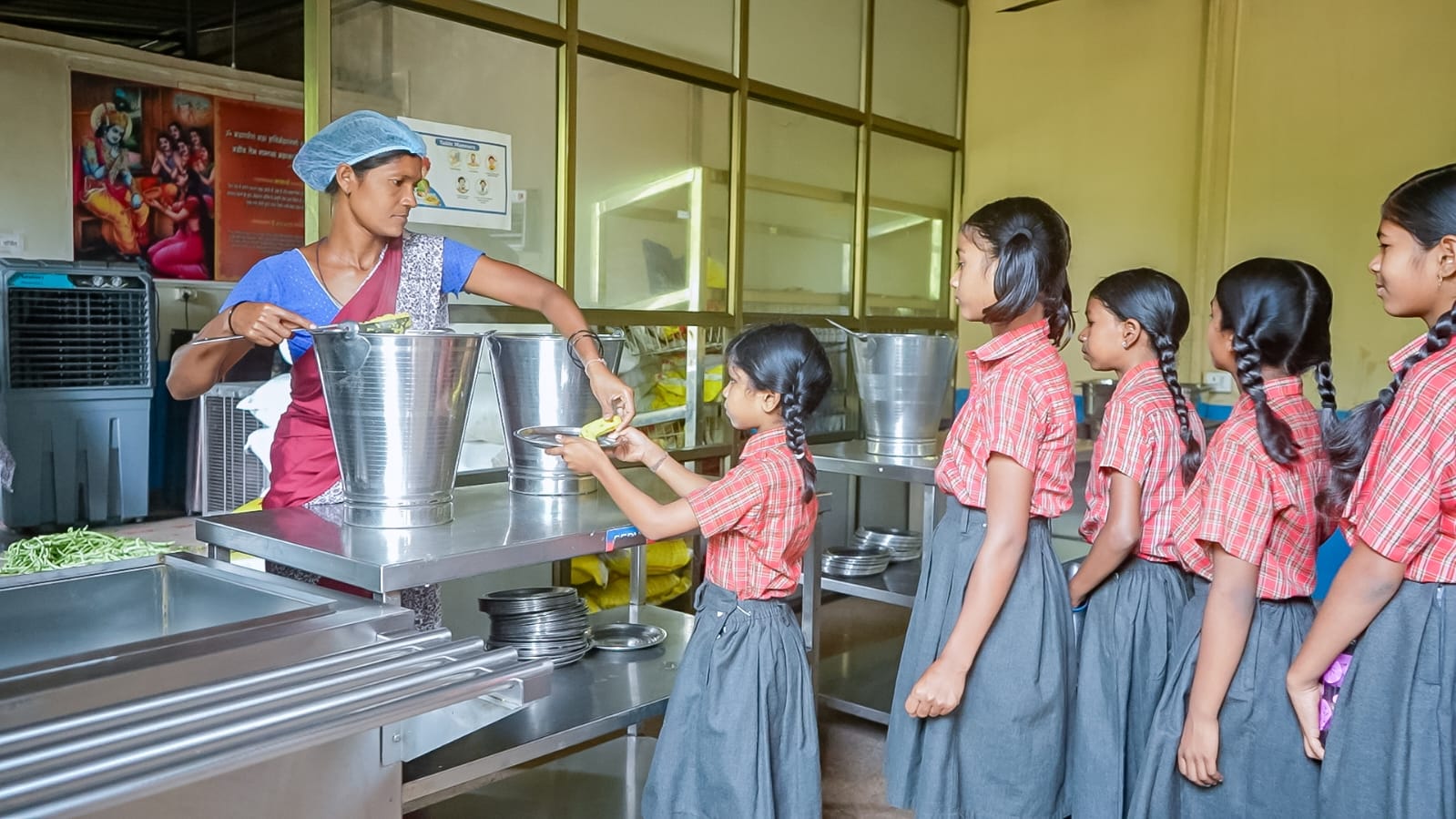
Surguja (Chhattisgarh) : A remarkable story of self-reliance and improved health has emerged from a remote rural area of Surguja district in Chhattisgarh, where rural women have come together to launch a unique “Nutrition Drive”. The initiative has not only helped combat malnutrition among children but has also created new avenues of local employment.

While mid-day meal supplies in schools often come from external vendors, the story is different for more than 1,000 tribal children from 14 villages studying at a particular rural school in Surguja. The green vegetables and milk served to the children come directly from the fields and home dairies of local women.
The most notable aspect of the initiative is that these women, who grow vegetables and supply milk, are not external vendors but mothers of children studying at the same school.
Geographical challenges: Difficulties amid hills and forests
The region of Surguja is known for its natural beauty but is equally challenging because of its difficult geographical conditions. Dense forests, uneven hilly roads and scattered settlements continue to make access to basic facilities a challenge in many villages.
Tribal families living in these remote areas have limited livelihood opportunities, which had a direct impact on children’s diet and health. The distance from health centres and lack of awareness had made anaemia and malnutrition major concerns among children in the region.
How the journey of change began
Some time ago, school teachers noticed that several children were unable to stand properly during the morning assembly because of physical weakness and lethargy.
To address the problem at its root, the school management and local rural women jointly prepared a master plan. The objective was not merely to provide children with food but to ensure a nutritious diet that could support their physical and mental development.
From farm to plate: An innovative model led by rural mothers
The real driving force behind the initiative is a group of rural women who are shouldering a dual responsibility. They are mothers at home and, at the same time, are working as providers of nutritious food for children at the school.
The model rests on three main pillars:
Healthy produce from mothers’ farms
The women, whose own children study at the school, grow fresh green vegetables organically on their farms. The vegetables are delivered directly to the school kitchen every morning, providing children with pesticide-free food.
Pure milk from local dairies
Women’s dairy collectives in the villages have taken responsibility for ensuring that every child receives fresh and pure milk every day. With a commitment to protect their children from malnutrition, the mothers ensure a regular supply of fortified milk, helping address deficiencies of calcium and protein among children.
The taste of a mother’s kitchen
A special group of local women manages the school kitchen. All of them are mothers of students studying at the school. As a result, the food is not only nutritious but also carries the care, hygiene and safety associated with a mother’s kitchen.
Nutrition menu: A variety of health on the plate
To ensure that children do not find their meals repetitive and receive a range of vitamins, a special “Nutrition Matrix” has been prepared based on certified nutritional requirements.
Fresh green vegetables: Seasonal and green leafy vegetables grown by mothers in local farms provide essential vitamins and minerals.
Protein-rich meals: Pulses and sprouted grains are included to support children’s physical development and address protein deficiency.
Fortified milk: Special nutrient-rich milk is provided daily for stronger bones and energy.
Fresh fruits: Fresh seasonal fruits are regularly distributed at the school to strengthen children’s immunity.
Structured activity: Along with nutrition, a special exercise routine conducted six days a week forms part of the model to improve children’s stamina.
Ground-level voice: “Our child no longer sleeps in class”
Amita Singh, president of the women’s self-help group managing the kitchen and grandmother of a student at the school, describes the change:
“Earlier, when our children returned from school, they looked tired and unwell. When the school authorities spoke to us, we decided that we would provide vegetables grown in our own fields. Now we mothers prepare the food together. We are proud that our own children and their friends will grow up eating nutritious food prepared by us and become senior officers. Running the kitchen and selling vegetables also provides us with a regular monthly income, which helps us meet the educational expenses of our children.”
The school’s chief coordinator and principal said:
“Because of the geographical isolation, providing nutrition to these children was the biggest challenge. We realised that education through textbooks alone cannot change a child’s future unless the child is physically healthy. Since local mothers have taken charge of improving the health of their children, the quality of food has improved several times over. No one can take better care of children’s health than a mother. Now children themselves insist on coming to school in the morning.”
Social barriers broken, attendance improves
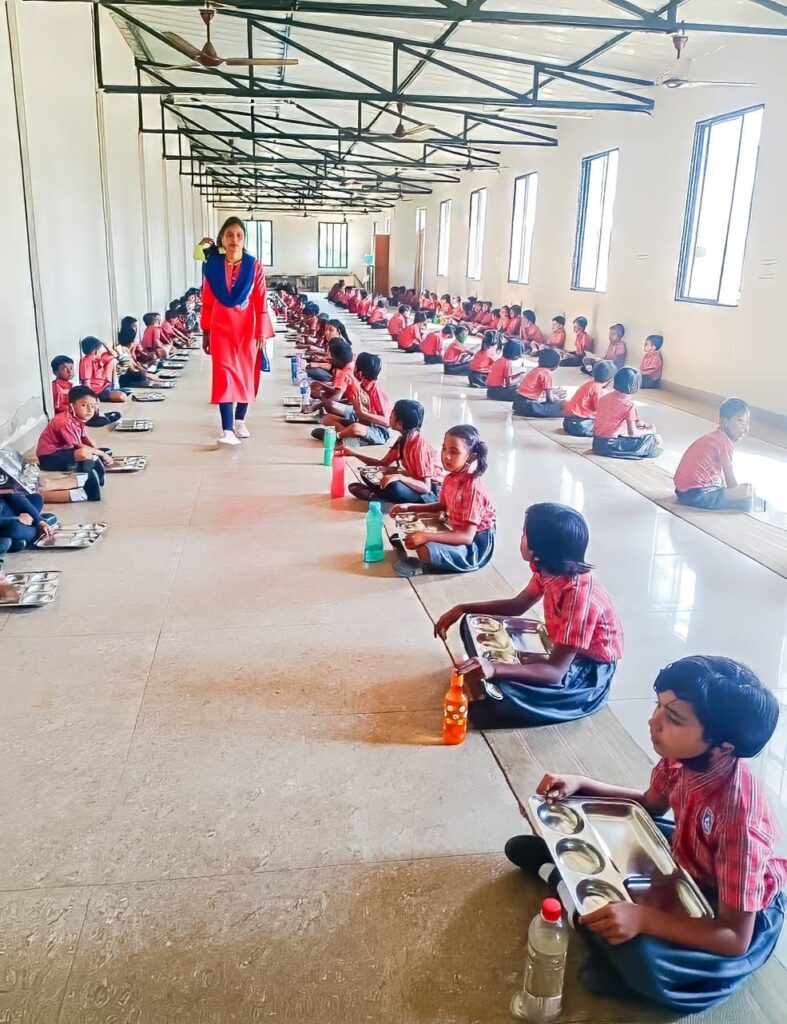
The impact of the campaign has not been limited to health. The school provides breakfast every morning and a balanced meal in the afternoon. Most importantly, more than 1,000 students, teachers and staff members sit together and share the meals.
This practice of eating together has helped eliminate feelings of social hierarchy and discrimination among the children.
The “Nutrition Drive” has also produced positive results in school attendance, which has improved significantly over the past few months. Children’s weight, stamina and confidence have improved rapidly. In classrooms, instead of dizziness and lethargy caused by weakness, children now appear more energetic and eager to learn.
A model for other rural areas
The Surguja initiative offers an example for rural communities across the country. It demonstrates how local resources, women’s empowerment and the strength of mothers can be brought together to address challenges such as malnutrition.
The model highlights how a community-led approach, with rural women at its centre, can combine better nutrition, improved health, livelihood opportunities and education to create a stronger foundation for children’s future.