
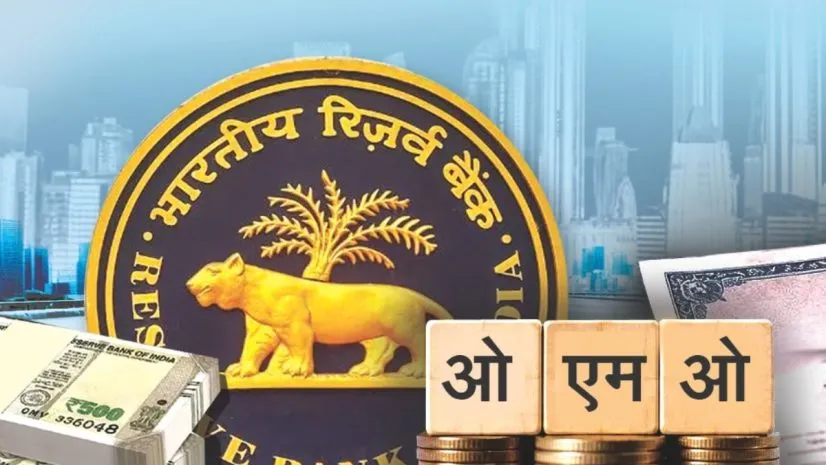
OMO bond sales and cash withdrawals for GST payments help absorb excess liquidity; call rate moves closer to policy repo rate
The Reserve Bank of India’s (RBI) measures to absorb excess liquidity through bond sales are beginning to show an impact, with the net liquidity surplus in the banking system declining to around ₹6 lakh crore, according to market participants.

The weighted average call rate, which serves as the operating target of monetary policy, rose to 5.24% on Monday from 4.92% on Friday, moving closer to the RBI’s policy repo rate.
Market participants attributed the change to a combination of the RBI’s open market operation (OMO) bond sales and cash outflows related to goods and services tax (GST) payments. Both factors have helped absorb surplus liquidity from the banking system.
The central bank had announced OMO bond sales to withdraw excess liquidity from the banking system. The first auction under the programme was conducted on Friday. According to the latest RBI data, the net liquidity surplus in the banking system stood at around ₹6 lakh crore between Friday and Sunday.
The surplus had climbed to a peak of ₹11.16 lakh crore during the first week of September.
The second OMO auction conducted on Monday also attracted strong demand. Against the notified amount of ₹25,000 crore, investors submitted bids worth ₹84,942 crore.
A senior official at a primary dealership said the decline in surplus liquidity was largely due to the combined impact of OMO operations and GST-related cash withdrawals. The official also noted that the call rate had moved closer to the repo rate.
The RBI has announced OMO bond sales worth a total of ₹1 lakh crore for September. The move is aimed at withdrawing part of the longer-term liquidity surplus created by large investment inflows through foreign currency non-resident (bank) deposits, or FCNR(B), under the dollar-rupee swap facility.
The central bank has also conducted longer-duration variable rate reverse repo (VRRR) operations to absorb the more temporary component of surplus liquidity.
Market participants said the impact on money-market rates will need to be assessed over the coming weeks, as liquidity conditions could change when month-end cash outflows reverse and further OMO operations are conducted.
Treasury officials at banks said another OMO programme of around ₹1 lakh crore in the coming months could have a significant impact on surplus liquidity. They added that rising currency in circulation and higher reserve requirements under the cash reserve ratio (CRR), as deposits expand, could further reduce the liquidity surplus.
Gaura Sen Gupta, Chief Economist at IDFC FIRST Bank, said that around ₹13 lakh crore of longer-term liquidity surplus may take until the second quarter of financial year 2028 to be fully absorbed.
Market participants also said the yield on the 10-year government bond could rise to between 7% and 7.25%. On Monday, however, the yield on the benchmark 10-year government security declined by two basis points to close at 7.05%.