
Tata Trusts’ counsel says the disagreement over N. Chandrasekaran’s new five-year term is a separate governance issue and should not be linked to Tata Sons’ listing status
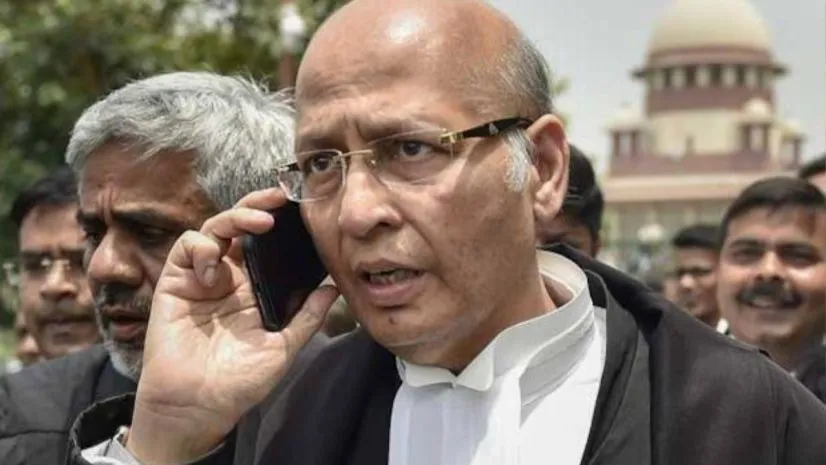
New Delhi: The dispute over the reappointment of Tata Sons Chairman N. Chandrasekaran is separate from the issue of Tata Sons’ listing, senior lawyer and Tata Trusts’ counsel Dr Abhishek Manu Singhvi has said.
The Tata Sons board had approved a fresh five-year term for Chandrasekaran, but the decision has been opposed by Noel Tata, Chairman of Tata Trusts and a Trust-nominated member of the Tata Sons board. Tata Trusts has appointed Singhvi, a senior jurist and former Additional Solicitor General, as its lead counsel in the matter.
In an email interview with Vikram Gopal, Singhvi argued that the board could not disregard the specific protective rights provided to Tata Trusts under Tata Sons’ Articles of Association.
Tata Trusts’ 66% stake at the centre of the dispute
According to Singhvi, Tata Trusts collectively hold a 66% stake in Tata Sons, making them the company’s largest shareholder. He said the board cannot take what he described as an arbitrary decision against the explicit opposition of the shareholder holding such a substantial stake.
Singhvi said Tata Trusts had sought only one-third representation on the Tata Sons board, while specific protective rights were provided under Articles 104B, 118 and 121 of the company’s Articles of Association.
He explained that Article 118 requires the consent of a majority of the Trust-nominated directors for certain board decisions. With only two Trust nominees currently on the board, Singhvi argued that both would have to agree for a majority to exist.
Since Noel Tata opposed Chandrasekaran’s reappointment, Singhvi said the required consent was not obtained and that the dissent effectively operated as a veto under the applicable provisions.
Singhvi questions use of casting vote
On the issue of a casting vote, Singhvi argued that such a vote would ordinarily arise only in the event of a deadlock among the board members.
He maintained that under Article 121, the dissent of the Trust nominee representing the majority shareholder’s interests amounted to a direct veto in this particular matter.
According to Singhvi, once the board lacked the legal authority to proceed with the decision under the relevant Articles, the acting chairman could not override that position through a casting vote. He further said Article 121 does not provide for a casting vote by a non-Trust chairman in such circumstances.
Tata Trusts not claiming ownership of Tata Sons
Responding to questions about whether the trustees could claim ownership over Tata Sons, Singhvi said the Trusts were only seeking enforcement of Articles 104B, 118 and 121.
He described these provisions as the constitutional framework governing the functioning of Tata Sons and said the dispute was about compliance with those provisions rather than a claim of ownership over the company.
Listing issue separate from reappointment dispute
Singhvi also rejected speculation that Tata Sons could consider restructuring or splitting the company to avoid potential consequences related to its listing status.
He said there was no reason to respond to hypothetical or speculative questions about such possible steps.
The comments also underline Tata Trusts’ position that the dispute over Chandrasekaran’s reappointment should not be conflated with the separate regulatory and corporate-governance questions surrounding Tata Sons’ potential listing.
Regret over escalation of dispute
Singhvi said his biggest concern was that the matter had reached a stage where litigation appeared to be becoming necessary.
He expressed regret that the disagreement had escalated to this point and said he wished a solution could have been found without legal proceedings.
Referring to the longstanding relationship and shared legacy of Tata Trusts and Tata Sons, Singhvi said separating the two amid bitterness would have been difficult to imagine and that the situation should ideally never have reached this stage.