
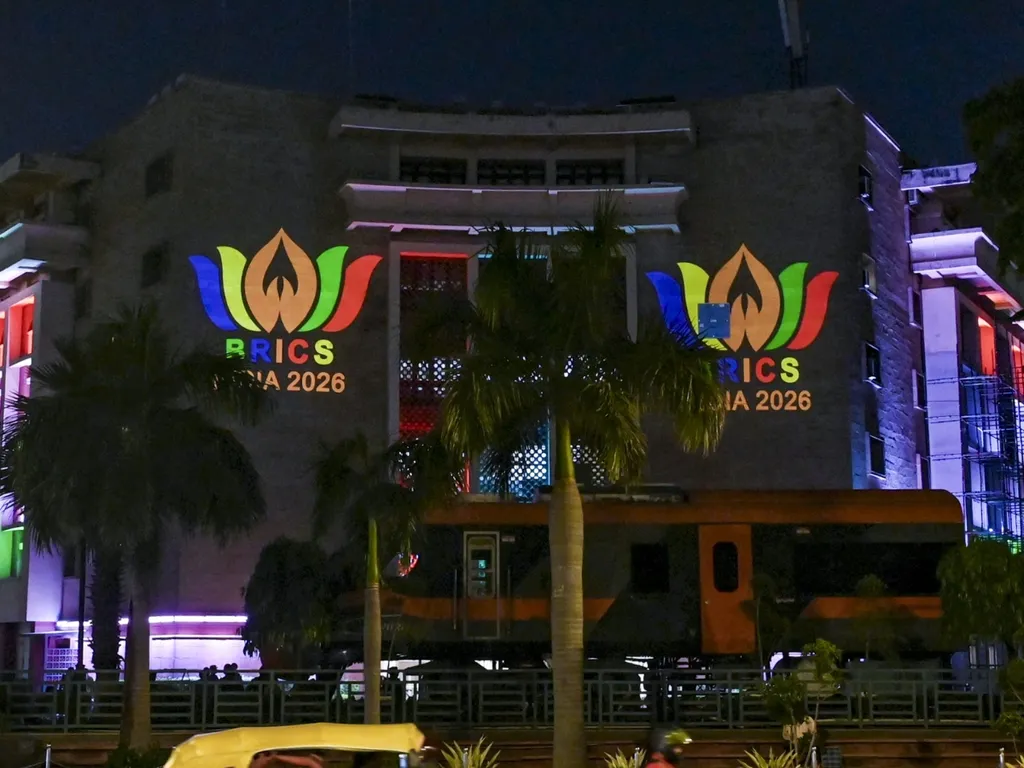
New Delhi summit to focus on trade, supply chains and global institutional reforms, while India stays away from the contentious common currency proposal
New Delhi, September 10, 2026: India is set to project BRICS as a platform for cooperation, dialogue and development, rather than as a bloc opposed to other international groupings, during the upcoming BRICS Summit in New Delhi.
As the current chair of the 11-member grouping, India is expected to maintain a cautious position on the idea of a common BRICS currency, a proposal that has previously received support from Russia and China. Instead, New Delhi is likely to prioritise practical areas such as trade, supply-chain resilience, economic cooperation and reforms of global institutions.
India’s approach is aimed at sending a clear message that BRICS can work alongside other international organisations while remaining focused on development and the interests of its member countries.
More than 50 development-focused outcomes
During its BRICS chairmanship, India has sought to present the grouping as a forum for consultation, mutual understanding and constructive cooperation.
The government plans to highlight more than 50 concrete outcomes achieved through BRICS-related meetings held during the year. These initiatives have focused on a people-centric approach and cooperation in areas such as resilience, innovation, collaboration and sustainability.
India has also been working to build consensus on reforms of global institutions and strengthen support for its candidature for a non-permanent seat on the United Nations Security Council for the 2028–29 term.
BRICS leaders begin arriving in New Delhi
Leaders of BRICS member countries are expected to begin arriving in New Delhi ahead of the summit. Some leaders will also participate in sessions of the BRICS Business Forum, where discussions will focus on strengthening trade and supply chains among member countries.
Reducing non-tariff barriers to trade is also expected to be an important issue during the business forum.
Modi-Putin meeting to focus on bilateral ties
Prime Minister Narendra Modi and Russian President Vladimir Putin are scheduled to hold bilateral discussions on the sidelines of the summit.
India and Russia are also looking to deepen cooperation in defence manufacturing, including their partnership involving BrahMos cruise missiles.
Kremlin spokesperson Dmitry Peskov recently said that India and Russia are jointly producing BrahMos missiles and that the two countries should consider further improving their capabilities, adding new features and making the missiles more competitive and effective in the market.
Trade is also expected to figure prominently in the Modi-Putin talks, particularly the issue of trade imbalance between India and Russia.
The two leaders had earlier met this month on the sidelines of the Shanghai Cooperation Organisation (SCO) summit in Bishkek, Kyrgyzstan. Another meeting is expected later this year when Modi is likely to travel to Russia for the annual India-Russia summit.
Modi to hold talks with Xi Jinping
Chinese President Xi Jinping is also expected to attend the BRICS summit. Modi and Xi are scheduled to hold a bilateral meeting at a time when India and China have been working to advance discussions related to their border issues.
China is set to take over the BRICS chairmanship from India after the New Delhi summit.
Consensus on joint declaration remains a challenge
One of India’s key challenges as BRICS chair will be building consensus among all members on the joint declaration expected at the conclusion of the summit.
Iran and the United Arab Emirates (UAE) will be particularly important in this process. Among the BRICS countries, Saudi Arabia, Brazil and the UAE are expected to be represented by senior ministers rather than heads of state or government.
Over 400 meetings held during India’s chairmanship
Senior Indian officials said India has organised more than 400 meetings during its BRICS chairmanship, with active participation from member countries.
These meetings have resulted in more than 50 concrete outcomes, including agreed frameworks, action plans, guidelines, platforms and networks aimed at strengthening cooperation.
The initiatives are broadly built around four key pillars: resilience, innovation, cooperation and sustainability.
India’s effort at the New Delhi summit will therefore be to demonstrate that BRICS can remain relevant as a practical platform for economic development and cooperation while avoiding unnecessary confrontation with other global groupings.