Too silent? Built to whisper, EVs look to mimic the growl of gas engines | Auto
 The Apna Chhattisgarh
By Erik Shilling
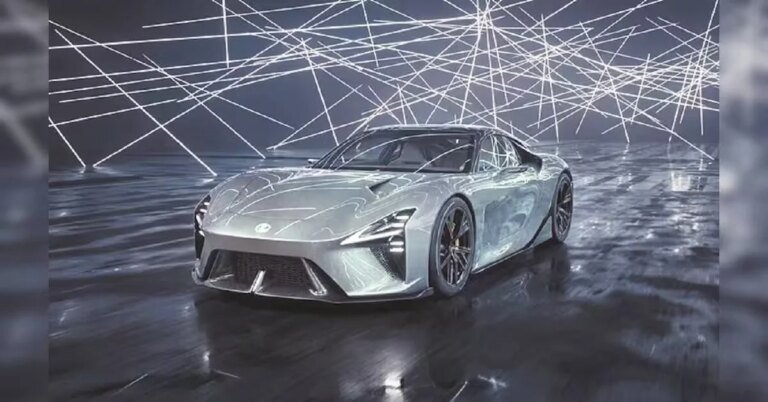
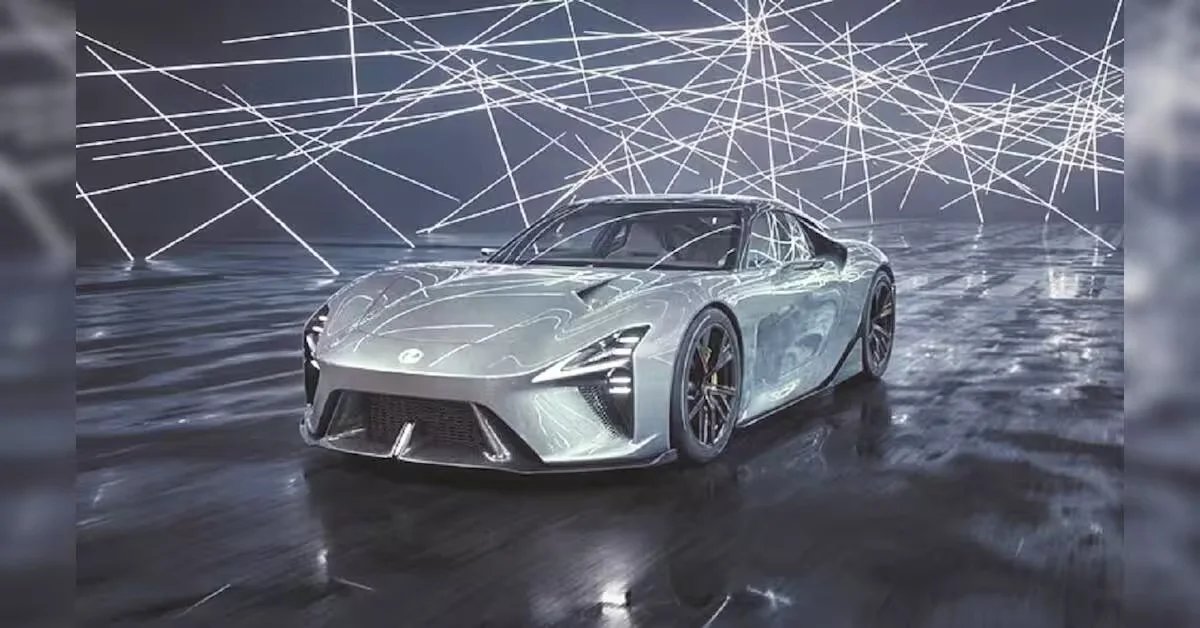
When Lexus unveiled the next version of its LFA supercar last year at an event in Japan, the company said the car had been born from a simple decree by the Toyota chairman, Akio Toyoda: “No more boring cars.”
Toyoda had one closing demand, too, and it had nothing to do with horsepower, styling or price. He wanted the new LFA to “completely redefine the sound of an electric sports car,” said Simon Humphries, the company’s head of design. “When this car’s finally finished, it’ll answer Akio’s last request.”
The focus on sound was a bit of an eye-opener, if only because the new LFA — which might not hit showrooms until 2029 — will most likely be judged by track times first and track noise second. Still, the emphasis on the car’s sound was as much a nod to the original LFA’s V-10 roar as it was an acknowledgment of a future in which electric cars all have plenty of power thanks to the instant, and much quieter, torque of electric motors.
Electric vehicle (EV) makers looking to distinguish their models instead will be forced to do so with creature comforts, expanded autonomous driving capabilities, more driving range and quicker charging.
That list also includes the way the car sounds — both inside, where the cabin noises can be customised almost endlessly, and outside, where regulations play a bigger role but also where the car presents its personality to the world. Think bigger, more aggressive, engine-like sounds from performance EVs and more subtle tones from economy EVs and city-bound cars that aspire to be good neighbours.
Ferrari’s first all-electric car, called the Luce and revealed in May, uses an accelerometer to pick up vibrations from the rear axle’s rotating components, sound that is then equalised and amplified to create a distinctive growl that early reviewers say nonetheless won’t be confused with a V-12. For mass-market EVs, road and wind noises are often buyers’ biggest concerns, and automakers have focused more on producing quiet, with the Rivian R1S emitting a gentle electric-motor whir and the Chevy Equinox EV aiming to sound like not much more than a whisper.
“I think brands are looking for ways to make their brand stand out to make them more distinctive,” said Jasper de Kruiff, a sound designer and cofounder of Impulse Audio Lab, which has worked with automakers including Rolls-Royce, Hyundai and Tesla. “I think one of the most powerful ways you can do that is through experience, and then again, one of the most powerful tools you have for experiences is sound.”
For years, automakers have also been designing the sounds of their internal-combustion cars, too, especially on the inside, where luxury cars are designed to be calming, even spa-like, in the way the cabin environments are tuned to reduce the stress of driving and riding. Mercedes-Benz, for instance, uses active noise cancellation in some of its cars, in addition to passive noise cancellation methods, including noise-insulating glass and a quieter air-conditioner, in cars like the new C-Class.
In electric cars, interior environments can be even more customised for owners and exterior noises adapted specifically to enhance the car’s presence, with automakers creating tailored sound experiences for each model in their all-electric lineups and spending hundreds of millions of dollars — or even, collectively, billions by some estimates — in hopes of setting themselves apart.
Automakers are tight-lipped about exact expenditures, and they have a policy of declining to comment on future products, instead preferring to talk about their newest releases, in part because before a car goes into production, key features of it, including the sound, could still change, and often do. But it’s clear that sound designs are getting ever more sophisticated and the stakes ever higher with the proliferation of EVs.
“Sound is such a strong link to emotions and memories,” Mr. De Kruiff said.
Modern cars are also increasingly run by software, integrated with numerous autonomous driving and safety sensors, and outfitted with larger and larger screens everywhere, making the cars of just a generation ago look primitive by comparison. When it comes to modern acoustics, older cars are almost prehistoric.
In the new BMW iX3, for example, a template for the brand’s future EVs, the sound that salutes drivers when the car door is opened is composed of the voices of the car’s designers speaking about the most joyful moment of their life, which was then remixed and rehashed by BMW into a welcome song.
©2026 The New York Times News Service
About the Author