IPL is a ‘finished commercial machine’, but what comes next? EMW CEO explains | Business
 The Apna Chhattisgarh
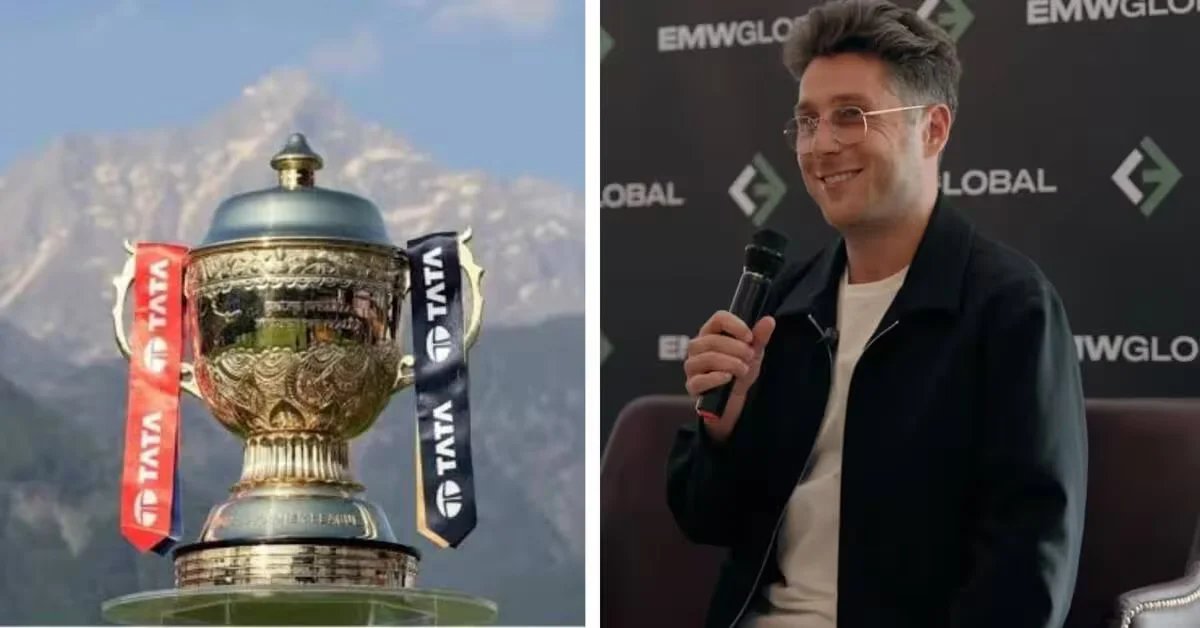
The Indian Premier League (IPL) has developed into a commercially mature sporting property, but the wider ecosystem around it has yet to achieve comparable commercial depth, according to Michael Rocha-Keys, founder and chief executive officer of sports marketing agency EMW Global.
Describing the IPL as a “finished commercial machine”, Rocha-Keys said the next phase of growth would depend on developing the ecosystem beyond the league, including stable competition calendars, investable franchises, effective media distribution and building athletes into personalities with commercial appeal beyond their performances on the field.
He pointed to Formula One’s transformation, particularly its use of storytelling to build the profiles of drivers, as an example of how sporting properties can generate commercial value beyond live competition. His assessment comes as the IPL’s business value reached an estimated $20.6 billion in 2026, according to Houlihan Lokey.
Rocha-Keys brings experience in international sports marketing, with EMW Global having worked on commercial partnerships involving football stars Lionel Messi and Neymar. The agency also secured a Chinese regional sponsor for Spain’s national football team and managed its China-focused social-media and content strategy during the team’s 2026 FIFA World Cup-winning campaign.
EMW is now expanding its operations in India, with Rinku Singh as its first Indian athlete signing. The agency is looking to develop the commercial value of Indian sporting personalities and take their brands to international audiences.
In an interview with Business Standard, Rocha-Keys discusses the IPL’s commercial ecosystem, lessons from international sporting properties, opportunities in athlete endorsements and EMW’s plans for India.
Edited excerpts:
Your report estimates that India has 678 million sports viewers, while its annual commercial sports industry was worth around $2.1 billion in 2025. Where is the gap between the size of the audience and the commercial value being generated?
Attention isn’t the problem. It’s a conversion problem. That relates to how the different avenues of commercialisation are addressed and organised.
Athlete endorsements, for example, are worth roughly $153 million a year. Even at that level, it is one of the most underdeveloped revenue streams relative to the popularity of Indian athletes in their domestic market.
Our job at EMW is to use data, rather than just follower counts, to identify where attention is under-commercialised and build digital-first, annual ambassador partnerships around those athletes.
What we have found since entering the market is that there are a lot of ad hoc, low-value, small deals being done. Our job is to create more year-round, long-term and consistent annual partnerships.
The IPL’s business value was estimated at $20.6 billion in 2026, while annual commercial spending across Indian sport was around $2.1 billion in 2025. What do they indicate about the concentration of commercial value and the state of the wider ecosystem?
These numbers measure different things, but they show how concentrated commercial value is in one area.
From my limited knowledge of cricket, because I am still learning more about the sport, I would say the IPL is a finished commercial machine. But the ecosystem around the IPL is not quite as developed as the commercial machine that the IPL has become.
What needs to happen to develop the wider cricket and sports ecosystem beyond the IPL?
If you look at leading international sporting properties, such as the Champions League or World Cups, there are certain requirements to build value.
You need a stable calendar, investable franchises, and proper distribution. The stars of the sport also need to be marketed as personalities, not just athletes or players.
That is when you really start building value, not only around the franchise or league but also around the wider sporting ecosystem.
Are there examples from other sports that Indian leagues and rights holders can learn from?
One example that comes to mind is Formula One.
If you compare Formula One today with where it was 10 or 15 years ago, it is completely different.
Liberty Media came in, invested and restructured the business. They understood that storytelling was needed.
Simply having drivers competing in races was not enough to drive commercial value. The drivers needed to become personalities.
One of the ways to achieve that was through storytelling. Netflix’s Drive to Survive helped transform Formula One into what I would argue is one of the most sought-after commercial opportunities in sport today.
It wasn’t like that 10 years ago. You can look at how long that transformation took and draw comparisons with how the IPL or other sporting rights holders might develop their wider ecosystems.
EMW has experience in markets such as China and Brazil. How do these markets compare with India, and what lessons can you bring to your Indian operations?
When we started EMW in 2018, our objective was to become a market leader in the world’s emerging markets.
We have managed to establish a strong position in China. We are developing and growing our agency in Brazil, and we are now starting in India.
Of all the markets we are developing, Brazil is probably the closest parallel to India.
Both countries have one dominant sport. In Brazil, it’s football, and in India, it’s cricket. The leading athletes are national icons.
At EMW, we understand how to turn local stardom into global value.
One of the biggest lessons from our expansion in China is that localisation wins.
India isn’t one homogeneous market. It is a huge country with many languages and regional differences.
China also has a very different digital ecosystem from the rest of the world, including its own social-media platforms.
What we have learnt is the importance of properly localising international sporting properties when bringing them into a market. The same principle applies when taking local athletes into international markets.
For us, storytelling and localisation have been among the most important factors behind our success in other markets.
You have worked on commercial partnerships involving global football stars such as Lionel Messi and Neymar. What have been the biggest lessons from those experiences?
We have been fortunate to work with some of the biggest athletes in the world, mainly in football, but now we are also getting opportunities across different sports.
The biggest lesson from working with players such as Messi, Neymar and Olivier Giroud is that these global stars build their brands through narrative and consistency, not just performance.
They perform on the pitch, but maintaining a consistent story around them is equally important.
For the cross-border and regional partnerships we have worked on, what has been successful is ensuring that content is localised in the right language, on the right platforms, with the right partners and supported by the appropriate communication and public relations strategy.
Can you share an example of how EMW has combined sponsorship and content localisation to build value for an international sporting property?
China is a good example because we have considerable experience with regional and localised sponsorship deals there.
We worked with Spain’s national football team, which went on to win the 2026 World Cup.
Before the World Cup, we brought one of China’s leading kitchen-appliance companies on board as a regional sponsor of the Spanish national team.
We were also appointed as the team’s official agency for its social-media and content strategy in China.
Our team in China managed the social-media channels, including content strategy, posting and localisation.
That meant we were not only delivering commercial value through sponsorship but also helping Spain engage more deeply with Chinese fans through localised content.
Another example is our work with Messi across several commercial partnerships in different sectors.
We facilitated a partnership involving Messi and a Chinese baijiu brand, a type of strong spirit.
We also worked on licensing opportunities involving football properties. One such partnership brought together Argentina and Portugal in a licensed product released ahead of a World Cup.
The bottles featured the image rights of both Messi and Cristiano Ronaldo and were developed as collector’s editions for their fans.
These are examples of how sponsorship, localisation, content and licensing can work together to create commercial value.
With the growing use of digital platforms and artificial intelligence, how are brands changing the way they assess an athlete’s commercial value? Is follower count still the most important consideration?
The digital landscape is constantly changing. Even with artificial intelligence, the rate of change is remarkable.
But one thing that has been true for some time is that relevance and engagement matter more than follower counts.
Brands understand this now. They want to reach the right audience, not necessarily the biggest audience.
They want an engaged, relevant and targeted audience.
For example, if you look at the data we analysed, Rohit Sharma leads on commercial value because of his engagement per post and consistency, not simply because of his audience size.
Brands understand that what matters most is relevance, consistency and engagement.
Cricket accounts for nearly 89 per cent of India’s commercial sports industry. With more players, franchises and tournaments competing for sponsorship money, do you see signs of saturation in the Indian cricket market?
The top is crowded and expensive, but I wouldn’t say the market is saturated. There is certainly a need for diversification.
As we discussed, athlete endorsements account for only around $153 million a year.
I think the risk is that brands are paying for fame rather than effectiveness.
Attention-to-value metrics are becoming increasingly important.
There is a lot of money and opportunity being left on the table when it comes to telling the stories of rising stars.
That is our job: to identify those undervalued opportunities, not necessarily the athletes who are already at the top, but those who are growing and developing, and help maximise their commercial potential.
Where do you see the next phase of commercial growth in Indian sport?
I see opportunities in international markets, emerging players, women’s cricket, non-live digital content, international sponsorships and ambassador partnerships.
I am talking specifically about the commercial side of sport — sponsorship, marketing and partnerships.
These are areas where there is still room for commercial growth.
Can cross-sport collaborations help Indian athletes build international audiences, while also helping global sporting properties become more relevant in India?
Absolutely. Cross-sport collaboration is one of the recognised ways of taking a national sport into international markets or localising an international sport in a particular country.
Look at what the NFL has done in expanding from the US into the UK, or what the NBA has attempted in Europe.
When athletes from different sports collaborate, it creates an opportunity for what we call cross-pollination between audiences.
You can take a cricket fan and expose them to football content, or take a football fan and introduce them to cricket content.
Collaborations between athletes from different sports can create those connections.
We have already started working on such collaborations, and we will continue to do so.
It will form part of our strategy to internationalise the talent we work with and also help international athletes become more relevant to Indian audiences.
It is a strategy that has worked well in China and other markets. I believe it can also resonate with Indian audiences.
How do you see EMW’s Indian athlete roster developing over the next two to five years?
For us, quantity is not the objective. We want to work with quality athletes who understand that building a brand is a process.
It is not just about performing on the field.
Athletes also need to understand the importance of storytelling and be willing to dedicate time and energy to building their own brands.
Identifying athletes who are prepared to do that will be important for us.
You will see a couple more announcements before the end of the year, including at least one additional athlete signing.
Next year, we will have a better understanding of how the market is responding and where the opportunities lie. We will then proceed step by step.
We do not want to represent a very large number of athletes.
We want a good, stable roster of quality athletes who have considerable room to develop and whom we can help fulfil that potential.
About the Author