PM Modi inaugurates Nitish Setu in Bihar as bridge naming sparks political row
 The Apna Chhattisgarh
Prime Minister Narendra Modi on Saturday inaugurated the six-lane cable-stayed Nitish Setu over the Ganga in Bihar’s Vaishali district, opening a major road link between the northern and southern parts of the state.
Named after former Bihar Chief Minister Nitish Kumar, the 9.76-km-long bridge has been constructed at a cost of around ₹4,280 crore. It connects Bidupur in Vaishali with Kachchi Dargah on the outskirts of Patna.
The bridge forms the main component of a larger 19.7-km connectivity project, which includes around 10 km of approach roads. The foundation stone was laid in August 2015, during Kumar’s tenure as chief minister, and the project had moved close to completion under his watch.
Modi was accompanied at the inauguration by Bihar Chief Minister Samrat Choudhary, Governor Lt Gen Syed Ata Hasnain (Retd.), Union Minister Chirag Paswan and other officials.
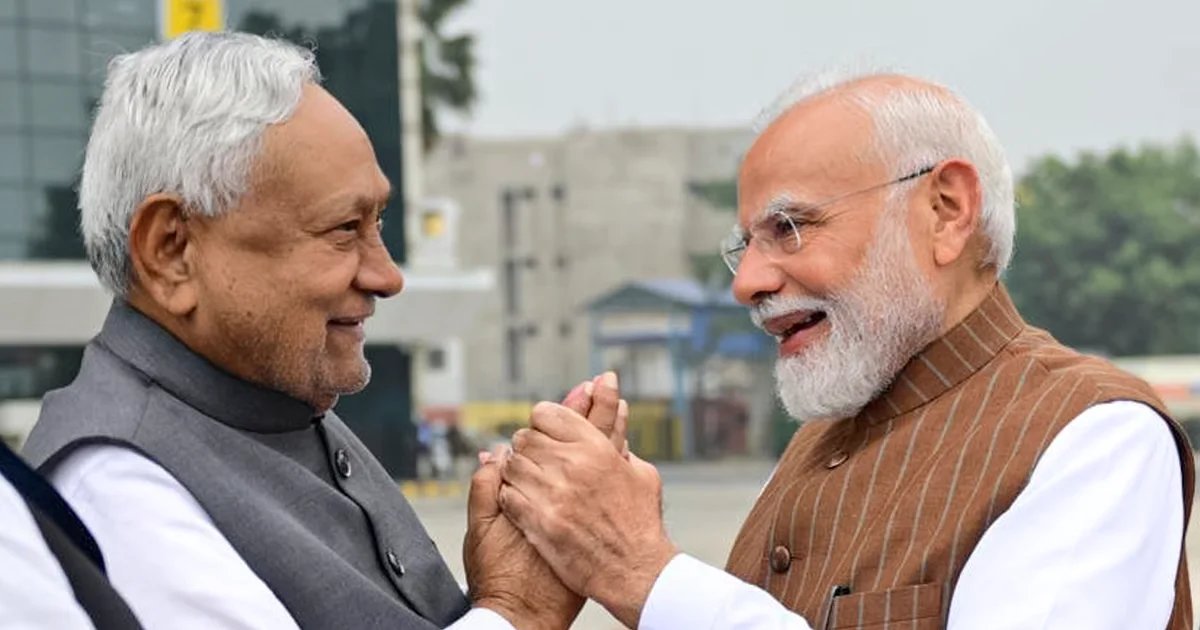
Before arriving at the bridge, the Prime Minister met Nitish Kumar at Patna airport, where the two shared a warm embrace.
Modi is also inaugurating and dedicating development projects worth around ₹34,470 crore in Vaishali. The initiatives cover road connectivity, energy, urban infrastructure, water resources, education, healthcare, transport and other sectors.
He is scheduled to address a public meeting in the district and flag off 100 PM e-buses to strengthen cleaner public transport in Bihar. Griha Pravesh ceremonies for more than 26,900 beneficiaries under the Pradhan Mantri Awas Yojana (Urban) are also being held.
How Nitish Setu will improve connectivity
The new bridge will provide an additional crossing over the Ganga, easing traffic pressure on the existing Mahatma Gandhi Setu and JP Setu and reducing travel time between north and south Bihar.
A major beneficiary is expected to be Raghopur Diara in Vaishali district. Surrounded by the Ganga and historically facing limited connectivity, the area will gain easier access to Patna and essential services, including hospitals and educational institutions.
The bridge is also expected to improve the movement of agricultural produce and industrial goods, giving farmers and businesses in north Bihar a faster route to markets.
Officials believe the Bidupur-Kachchi Dargah corridor could attract investment and develop into a centre for tourism and logistics, while strengthening trade and the agricultural economy in the region.
Bridge naming triggers political controversy
While the inauguration marks a major infrastructure milestone, the decision to name the bridge after Nitish Kumar has triggered a political dispute between the ruling BJP-JD(U) alliance and the opposition Rashtriya Janata Dal (RJD).
RJD working president Tejashwi Yadav alleged that the BJP was attempting to send a message that Kumar’s political career was over.
“It is well known that when a person is alive, his statues are not erected nor are bridges named after him. So, maybe, they are trying to send across the message that Nitish Kumar is politically finished,” Yadav was quoted as saying by PTI.
The BJP, however, described the bridge as a symbol of development under Kumar’s leadership. It called Yadav an “irresponsible leader” and accused his family of corruption.
Congress leader Pawan Khera also criticised the naming decision, arguing that the bridge should have been named after the tenth Sikh Guru, Guru Gobind Singh. He said the decision had hurt the sentiments of the Sikh community.
Echoing Yadav’s remarks, Khera wrote on X: “Doing in his lifetime what should be done after his death also raises the question: Why is Nitish Kumar Ji being pushed out of the political mainstream in such a hurry?”
Prashant Kishor credits Nitish Kumar
Jan Suraaj founder Prashant Kishor credited Nitish Kumar for the construction of the bridge and accused both the BJP and RJD of unnecessarily trying to claim a share of the project’s credit.
Kishor also alleged that the BJP was gradually weakening Kumar’s party politically. He pointed to the former chief minister’s alleged underrepresentation in NDA posters ahead of the inauguration as an indication of this trend.
The bridge, conceived during Kumar’s tenure and now named in his honour, has thus become both a significant addition to Bihar’s transport infrastructure and the centre of a political debate over credit and the former chief minister’s place in the state’s politics.
About the Author