
Cyclone Akvan heads towards Andhra-Odisha coast; schools shut in seven districts
 The Apna Chhattisgarh
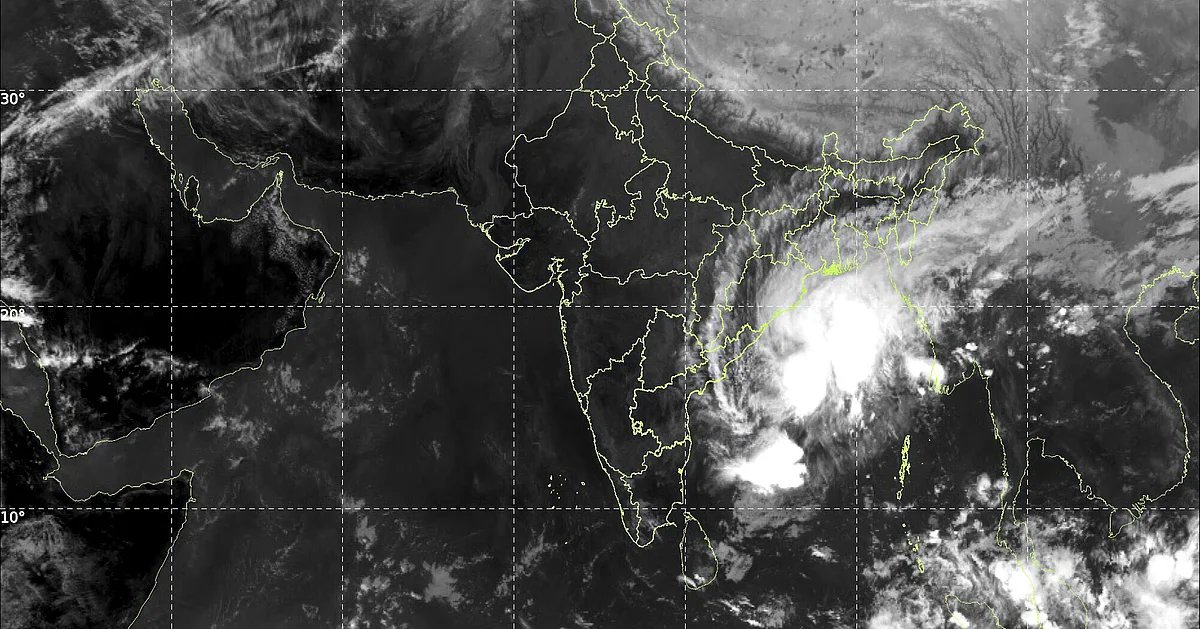
Severe cyclonic storm Akvan continued moving towards the Andhra Pradesh-Odisha coastline on Wednesday, prompting authorities to close educational institutions, deploy emergency response teams and intensify evacuation preparations as the India Meteorological Department (IMD) warned of extremely heavy rainfall and strong winds over the next two days.
In its latest advisory, the IMD said the cyclone was likely to cross the north Andhra Pradesh, Yanam and south Odisha coasts between Narsapur and Puri around noon on November 20, with maximum sustained wind speeds of 90–100 kmph, gusting to 110 kmph.
The weather agency revised its earlier forecast, which had suggested that Akvan could make landfall as a very severe cyclonic storm. The latest assessment indicated that it would cross the coast as a severe cyclonic storm.
At 2.30 pm on Wednesday, the system was positioned approximately 520 km southeast of Narsapur, 560 km east of Chennai, 570 km south-southeast of Kalingapatnam, 660 km south of Gopalpur and 720 km south of Puri. It was moving north-northwestwards at approximately 8 kmph.
𝐎𝐝𝐢𝐬𝐡𝐚 𝐨𝐫𝐝𝐞𝐫𝐬 𝐬𝐜𝐡𝐨𝐨𝐥 𝐜𝐥𝐨𝐬𝐮𝐫𝐞𝐬
The Odisha government directed all government, aided and private schools, along with Anganwadi centres, in Ganjam, Gajapati, Puri, Jagatsinghpur, Kendrapara and Kandhamal districts to remain closed from November 19 to 21.
The Khordha district administration separately announced the closure of schools from pre-primary to Class XII on November 19 and 20, taking the number of districts with announced school closures to seven.
District collectors have been authorised to extend the closures depending on local weather conditions.
In Malkangiri, authorities also announced the closure of schools, colleges and Anganwadi centres on November 19 and 20 as a precautionary measure.
𝐄𝐯𝐚𝐜𝐮𝐚𝐭𝐢𝐨𝐧𝐬, 𝐫𝐞𝐬𝐜𝐮𝐞 𝐭𝐞𝐚𝐦𝐬 𝐦𝐨𝐛𝐢𝐥𝐢𝐬𝐞𝐝
Odisha stepped up disaster preparedness, deploying 131 fire service teams across 10 locations for rescue, evacuation and emergency operations. The deployment included 114 existing teams and 17 additional units.
Authorities identified approximately 55 landslide-prone villages in Rayagada district for possible preventive evacuation.
The state administration has also been preparing to shift vulnerable residents from areas threatened by flooding and landslides.
Odisha Police intensified preparedness across seven districts under its Central Range, with particular attention to Kendrapara, Jagatsinghpur and Puri, which were identified as high-risk areas.
Chief Minister Mohan Charan Majhi was scheduled to chair a high-level review meeting on Wednesday evening to assess evacuation arrangements, departmental preparedness and the deployment of emergency resources.
The state government also activated the BASUDHA Helpline 1916 and began assessing drinking water supplies, emergency generators, water treatment units, pumps and restoration equipment.
𝐄𝐱𝐭𝐫𝐞𝐦𝐞𝐥𝐲 𝐡𝐞𝐚𝐯𝐲 𝐫𝐚𝐢𝐧 𝐟𝐨𝐫𝐞𝐜𝐚𝐬𝐭
The IMD warned that coastal Andhra Pradesh, Yanam and Odisha could experience extremely heavy rainfall at isolated locations on November 19 and 20.
Thunderstorms, lightning and strong winds were also forecast across the affected areas.
In coastal Andhra Pradesh and Yanam, gusty winds could reach 80–90 kmph during November 19 and 20, while Odisha could experience thundersqualls with gusts reaching 70 kmph.
The weather department also forecast heavy to very heavy rainfall in parts of southern West Bengal, particularly Purba Medinipur and Paschim Medinipur, with heavy rainfall expected in South 24 Parganas, Howrah, Jhargram and Bankura.
Kolkata was likely to experience thunderstorms between November 19 and 21, accompanied by winds of 30–40 kmph.
Rainfall was also forecast across parts of Jharkhand, Telangana, Chhattisgarh and other eastern and central Indian states.
𝐀𝐧𝐝𝐡𝐫𝐚 𝐬𝐭𝐞𝐩𝐬 𝐮𝐩 𝐩𝐫𝐞𝐩𝐚𝐫𝐞𝐝𝐧𝐞𝐬𝐬
Andhra Pradesh authorities continued preparations for the approaching storm, which would be the third cyclone to threaten the state within a month.
Chief Minister N Chandrababu Naidu had directed officials to maintain disaster response readiness, deploy rescue teams and ensure that electricity restoration personnel were available in case of widespread disruptions.
Districts including Konaseema, Kakinada, East Godavari, West Godavari, Krishna, NTR and Guntur were among those identified for heightened preparedness.
The weather department advised fishermen against venturing into affected parts of the Bay of Bengal because of dangerous sea conditions.
Officials were also instructed to monitor vulnerable coastal settlements and ensure timely dissemination of warnings.
𝐑𝐚𝐢𝐥𝐰𝐚𝐲𝐬 𝐚𝐜𝐭𝐢𝐯𝐚𝐭𝐞 𝐰𝐚𝐫 𝐫𝐨𝐨𝐦𝐬
Union Railway Minister Ashwini Vaishnaw reviewed preparations with senior railway officials, including representatives of South Coast Railway, and directed them to prioritise passenger safety and infrastructure protection.
Dedicated war rooms were activated at divisional, zonal and Railway Board levels for continuous monitoring of train operations.
Restoration equipment, essential materials and personnel were kept ready for immediate deployment.
Railway authorities were also directed to coordinate with state governments and disaster management agencies regarding possible train cancellations, diversions and rescheduling.
The IMD advised residents of coastal Andhra Pradesh, Yanam and Odisha to remain alert and follow official weather warnings as Akvan approached the coastline.
The storm’s projected track and intensity remained subject to further updates before its expected landfall on Friday.
About the Author