
Delhi air pollution: Another polluted morning in Delhi as AQI rises to 246 | India News
 The Apna Chhattisgarh
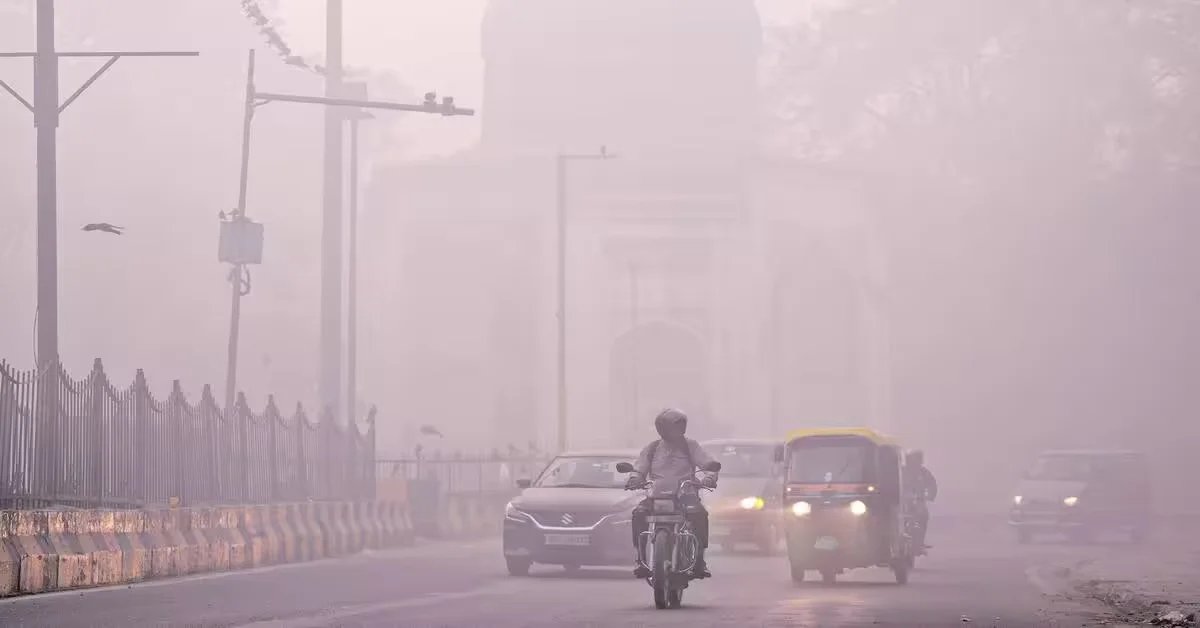
Delhi’s air quality remained in the ‘poor’ category on Tuesday morning, with the city-level Air Quality Index (AQI) rising to 246 at 7 am from 216 on Monday, according to the Central Pollution Control Board’s (CPCB’s) real-time data. PM2.5 was identified as the prominent pollutant in the capital.
The latest readings point to persistent pollution across the city, with 52 of the 58 monitoring stations reporting AQI levels above 200. Eleven locations recorded readings above 300, although none entered the ‘severe’ category. Under the CPCB’s National Air Quality Index classification, readings between 101 and 200 are categorised as ‘moderate’, 201-300 as ‘poor’, 301-400 as ‘very poor’ and 401-500 as ‘severe’.
Sirifort recorded the highest AQI at 341, followed by Commonwealth Sports Complex at 338 and NSUT Jaffarpur at 336. ITO registered 335, while Talkatora Garden recorded 326. Pusa, monitored by the Indian Institute of Tropical Meteorology, reported 322, followed by Burari Crossing at 318, Chandni Chowk at 316, and Narela at 313.
At the other end of the spectrum, Cantonment Area recorded the lowest AQI at 151, followed by Pusa’s Delhi Pollution Control Committee (DPCC) station at 165 and IMD Lodhi Road at 182. These readings were in the ‘moderate’ category, highlighting the variation in air quality across the capital.
Pollution levels across neighbouring National Capital Region (NCR) cities remained elevated, with Haryana locations reporting some of the highest readings. Sonipat recorded an AQI of 312, followed by Gurugram at 297 and Bhiwadi at 278. Bahadurgarh stood at 247 and Manesar at 241. Ghaziabad recorded 191, Noida 187, Faridabad 184, and Greater Noida 174. While Sonipat, Gurugram, Bhiwadi, Bahadurgarh and Manesar were in the ‘poor’ category, the remaining cities were in the ‘moderate’ category.
The national pollution picture was led by Haryana, with Ballabgarh recording the highest AQI among 280 cities with valid readings in the CPCB’s 7 am dataset, at 344. Sonipat followed at 312, while Panchgaon in Haryana registered 311. Bikaner in Rajasthan recorded 305, followed by Gurugram at 297, Khairthal in Rajasthan at 291, and Gajraula in Uttar Pradesh at 283.
At the other end, Sivasagar in Assam recorded the lowest AQI at 30, followed by Eloor in Kerala at 33 and Leh in Ladakh at 35. Naharlagun in Arunachal Pradesh and Srinagar in Jammu and Kashmir recorded 35 and 39, respectively. These cities were in the ‘good’ category.
Meanwhile, Stage III of the Graded Response Action Plan (Grap) continues to remain in force across Delhi-NCR, even as the capital’s city-level AQI is currently below the 300 mark. The Commission for Air Quality Management (CAQM) invoked Stage III on November 6, after Delhi’s daily average AQI reached 382 and forecasts indicated that pollution levels could deteriorate further into the ‘severe’ category.
Air purifier sales rise amid worsening pollution
The deterioration in air quality is also driving demand for air purifiers, with retailers and online platforms reporting a sharp increase in sales. Amazon India said sales of air purifiers on its platform doubled in the week leading up to November 15. Tata Group-owned Croma reported that sales volumes had more than doubled in 2026, while Xiaomi India said its air purifier sales had grown nearly fourfold year-on-year. Demand, although strongest in Delhi-NCR, is also spreading to markets such as Mumbai, Bengaluru, Karnataka, Tamil Nadu and Telangana, pointing to a wider shift towards indoor air quality products.
About the Author