Manner and Timing of Rotating SC/ST Reserved Seats Lies Within Government’s Discretion: Supreme Court
 The Apna Chhattisgarh
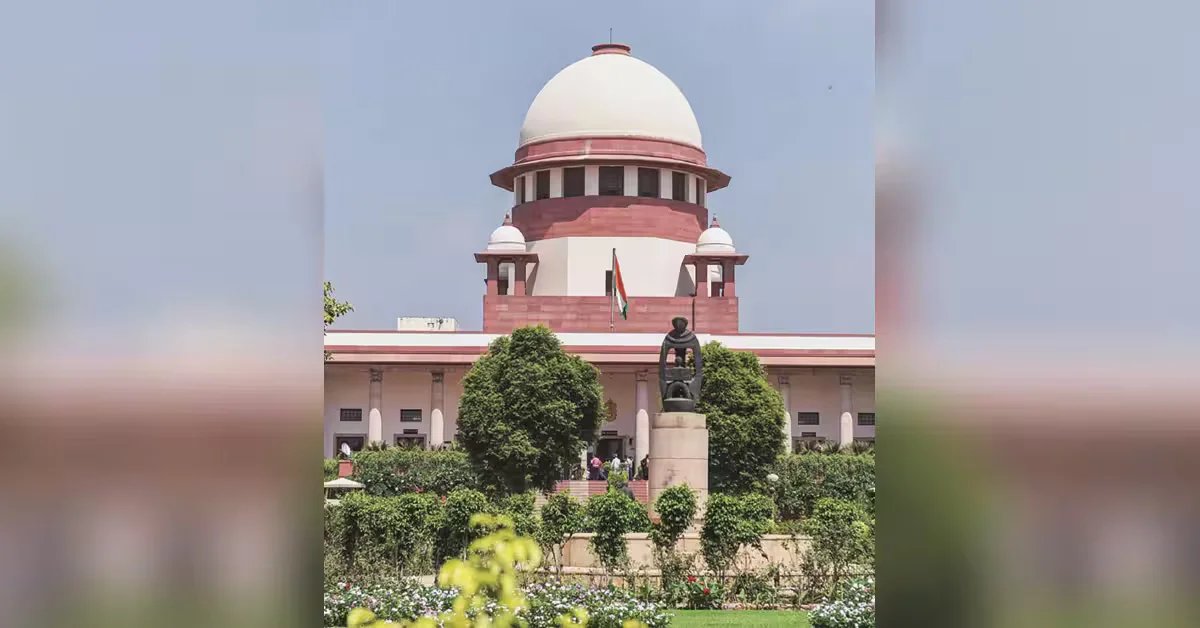
New Delhi: The Supreme Court on Monday (November 16, 2026) held that the manner and timing of rotating seats reserved for Scheduled Castes (SC) and Scheduled Tribes (ST) in local body elections fall within the discretion of the State Government. The Court ruled that no voter or candidate has a vested right to have any particular constituency reserved for SC or ST candidates.
A Bench comprising Justices Joymalya Bagchi and V. Mohana (with reports also noting the presence of Chief Justice of India Surya Kant in related proceedings) dismissed a petition challenging Rule 12 of the Maharashtra Zilla Parishads and Panchayat Samitis (Manner and Rotation of Reservation of Seats) Rules, 2025.
Background of the Challenge
The petitioner, Sau Rupali Indrabhushan Sonde, had challenged Rule 12, which provides that the next general election held after the commencement of the 2025 Rules shall be treated as the first election for the purpose of rotating reserved seats.
The petitioner argued that this provision effectively resets the rotation cycle by shifting the cut-off date. This, it was claimed, renders the principle of rotation illusory and could deprive certain constituencies of the opportunity to be reserved in the near future. The plea was first rejected by the Bombay High Court (Nagpur Bench) before reaching the Supreme Court.
Supreme Court’s Key Observations
Rejecting the challenge, the Court observed:
“Though the argument is attractive at first blush, the same fails to take into consideration that no voter or candidate can have a vested right to have a particular constituency reserved.”
Justice Bagchi noted that while the Constitution (Article 243D and related provisions) and the applicable rules (including Rule 4(2) of the 1961 Rules) speak of rotation of reserved seats in descending order of SC/ST population, the mechanism and timeframe for implementing such rotation remain within the State Government’s discretion.
The Court clarified that the constitutional framework and the rules ensure:
- Proportionate reservation of seats based on the proportion of SC/ST population in the local body concerned.
- Rotation of reserved seats according to the descending order of SC/ST population.
However, these provisions do not guarantee that any specific constituency will remain or become reserved at a particular time.
The Bench held that Rule 12, which treats the next election after the 2025 amendment as the starting point for rotation, does not run counter to the concepts of reservation or rotation of seats.
Outcome
The Supreme Court dismissed the special leave petition. It granted the petitioner liberty to file a representation before the Maharashtra Government seeking reconsideration of the rotation framework, if so advised.
Broader Context
This ruling comes shortly after the Supreme Court, on November 4, 2026, declined to mandate rotation of SC/ST-reserved seats in Parliament and State Legislative Assemblies, holding that such a policy decision falls within the domain of the Legislature.
The latest judgment reinforces that while the principle of rotation is recognised for local bodies under the Constitution, the practical details of its implementation — including the starting point and timing — are matters of governmental policy and not subject to a vested claim by individual voters or candidates.
About the Author