NIT Rourkela develops solar-powered EV charging system for grid stability | Tech News
 The Apna Chhattisgarh
With the growing adoption of electric vehicles (EVs) putting additional pressure on electricity networks, researchers at the National Institute of Technology (NIT), Rourkela, have developed a new technology that could make EV charging stations more efficient, reliable and sustainable while reducing stress on conventional power grids.
The researchers have designed and developed a solar-powered EV charging microgrid that integrates solar panels, the conventional electricity grid and a specialised energy storage system, combining batteries and supercapacitors to manage fluctuations in power generation and sudden changes in electricity demand. They have secured a patent for the technology.
The innovation, they claimed, can address some of the key engineering challenges associated with expanding EV charging infrastructure, particularly the impact of multiple vehicles charging simultaneously and the intermittent nature of renewable energy.
According to the researchers, one major challenge in expanding EV charging infrastructure is managing sudden spikes in electricity consumption when several vehicles draw power simultaneously.
Such surges can place considerable stress on local distribution networks, affecting their stability and reliability. The problem becomes more complex when charging stations rely partly on solar power, as electricity generation fluctuates with weather conditions, cloud cover, seasons and the time of day, they said.
While batteries can store surplus solar energy for use during periods of low generation, frequent charging and discharging can accelerate their degradation and reduce their operational life. Moreover, conventional battery-based storage systems may also struggle to respond efficiently to sudden variations in power demand.
Pravat Kumar Ray, professor in the Electrical Engineering Department, said the team addressed these limitations through a hybrid storage architecture that combines batteries, suited to meeting sustained electricity requirements, with supercapacitors that can respond rapidly to short-duration fluctuations in power demand.
“In the developed microgrid, batteries handle powering stations during slow and sustained electricity demands. Supercapacitors used in our design can absorb and release energy much faster and thus respond well to sudden fluctuations. Once the two components are combined, stressful current fluctuations do not damage batteries, thereby extending their life,” he explained.
The technology also incorporates intelligent power management capabilities to regulate electrical voltage, determine the amount of electricity supplied for EV charging based on the vehicle battery’s state of charge and control the flow of electricity from vehicles back into the grid.
Arnab Ghosh, associate professor, said a key innovation in the system is an improved mixed droop control technique, a smart mechanism that automatically regulates the distribution of power among different energy sources and storage components according to changing operating conditions.
“The technique enables stable power sharing between batteries and supercapacitors, helping the microgrid respond to variations in electricity generation and demand without compromising system stability,” he said.
At present, most electric vehicles operate through grid-to-vehicle (G2V) charging, under which electricity is drawn from the power grid to charge vehicle batteries. Vehicle-to-grid (V2G) technology, on the other hand, allows stored electricity in EV batteries to be fed back into the grid when required.
V2G systems can potentially enable electric vehicles to function as distributed energy storage resources, supporting the power network during periods of high demand. Since managing electricity flows in both directions requires sophisticated control mechanisms, the technology has been designed to facilitate both G2V and V2G operations.
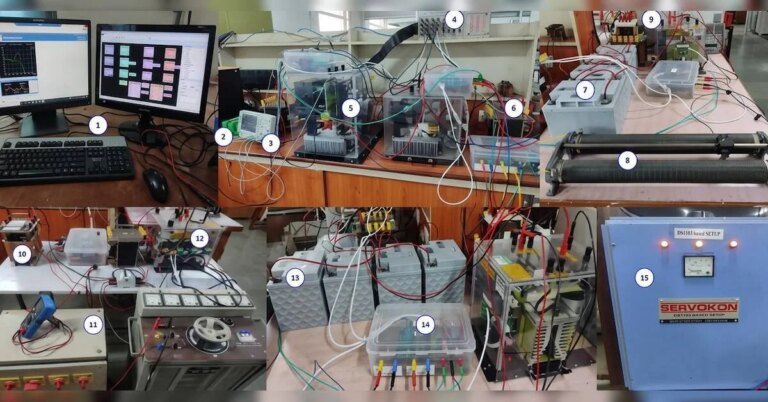
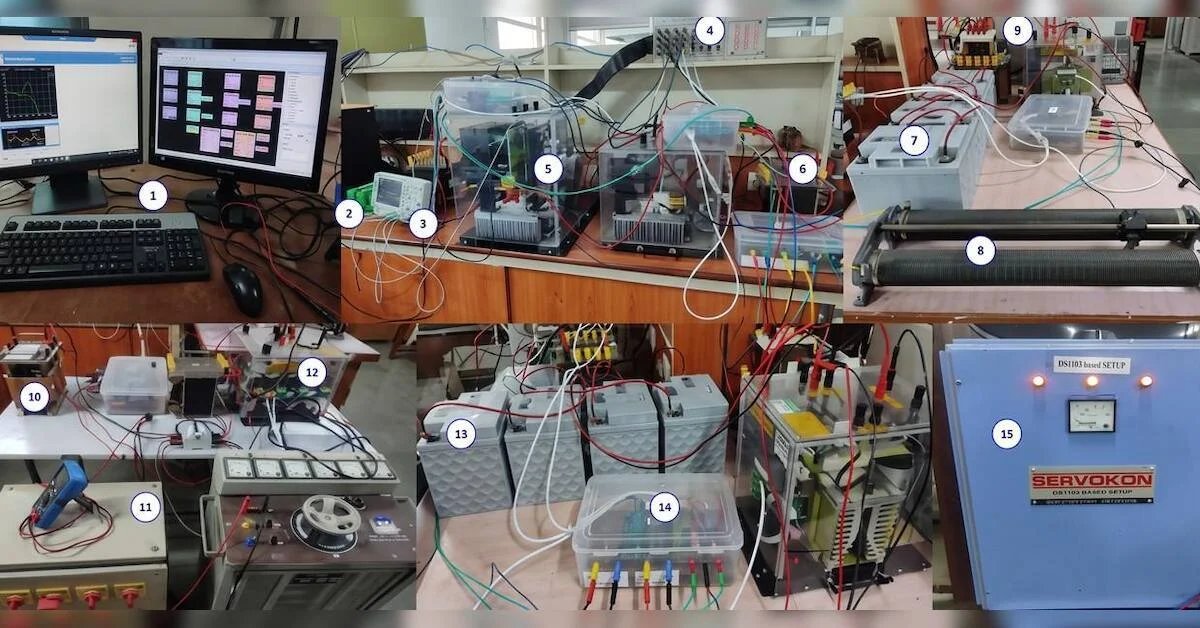
The researchers have also developed a prototype of the proposed microgrid and tested its performance under simulated variations in solar power generation and electricity demand. They will soon move towards a higher-capacity version of the technology and undertake further development to make it suitable for practical deployment.
“As the next step, we plan to scale up the developed prototype for a higher-power EV charging system by integrating advanced battery management and energy optimisation algorithms. We will also explore grid-forming control, multiple EV integration, conduct real-time field trials, and develop an industry-ready smart EV charging solution,” he added.
The proposed technology comes at a time when India is seeking to accelerate the transition to electric mobility to reduce its dependence on imported crude oil, contain vehicular air pollution and meet its long-term climate commitments, including the target of achieving net-zero emissions by 2070.
Once commercialised, the NIT Rourkela-developed system could be deployed across residential complexes, commercial establishments, educational and institutional campuses and public EV charging facilities.
Its integration of solar generation, hybrid energy storage and intelligent power management could help charging infrastructure make better use of renewable electricity while providing additional support to the conventional grid.
About the Author