Delimitation push: How the numbers stack up for NDA in Lok Sabha and Rajya Sabha
 The Apna Chhattisgarh
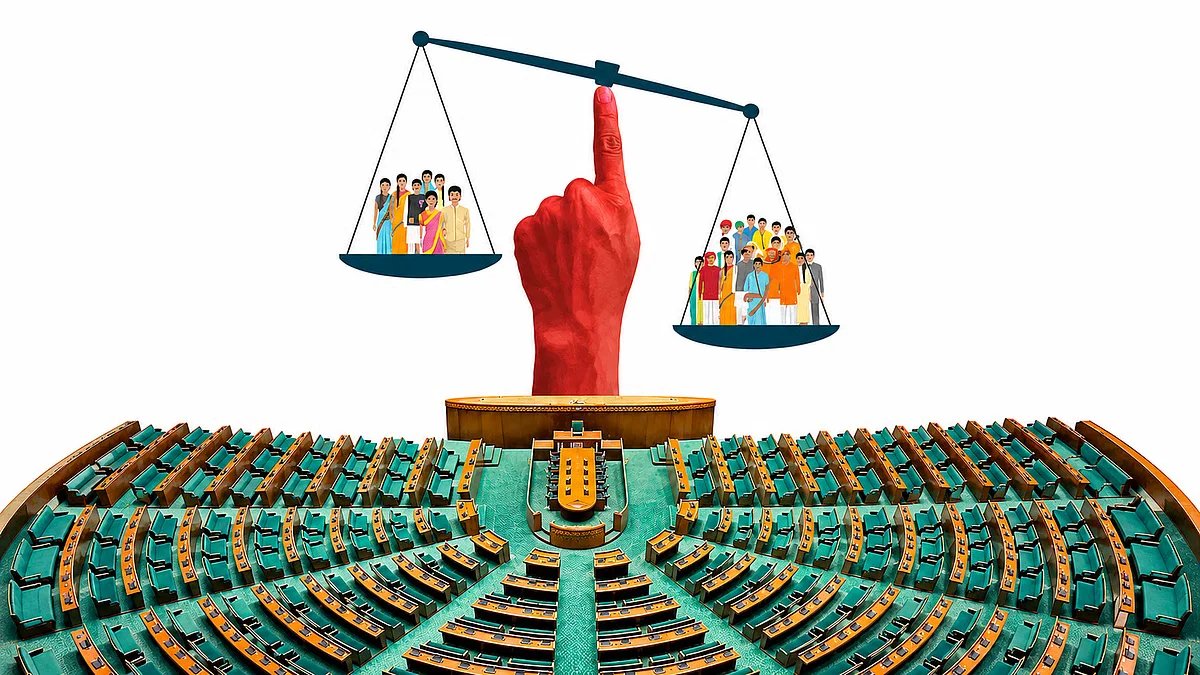
Ahead of the special Parliament sitting beginning November 30, the parliamentary arithmetic has assumed significance as the BJP-led National Democratic Alliance (NDA) prepares to revive legislation linking delimitation with the implementation of 33 per cent reservation for women in the Lok Sabha and state legislative assemblies.
The government, which failed to secure the requisite two-thirds majority during its previous attempt in April, could benefit from subsequent changes in political alignments, defections and potential support from regional parties.
𝗟𝗼𝗸 𝗦𝗮𝗯𝗵𝗮 𝗮𝗿𝗶𝘁𝗵𝗺𝗲𝘁𝗶𝗰
With an effective strength of 539 members in the Lok Sabha, the two-thirds majority threshold stands at 360 votes if all members participate in voting.
The NDA currently has 293 MPs, leaving it 67 votes short of this threshold.
However, the ruling coalition could potentially secure additional support from breakaway Trinamool Congress MPs, Shiv Sena rebel parliamentarians, the YSR Congress Party, the Shiromani Akali Dal and an independent MP.
The positions taken by the Dravida Munnetra Kazhagam (DMK) and the Nationalist Congress Party (Sharadchandra Pawar) could also influence the outcome.
Potential abstentions by opposition parliamentarians could further reduce the number of affirmative votes required to secure a two-thirds majority of members present and voting.
𝗥𝗮𝗷𝘆𝗮 𝗦𝗮𝗯𝗵𝗮 𝗻𝘂𝗺𝗯𝗲𝗿𝘀
In the Rajya Sabha, which has an effective strength of 242 members, the two-thirds majority threshold stands at 162 votes if all members vote.
The ruling coalition holds 140 seats, leaving it 22 votes short of that threshold.
Support from regional parties, independent parliamentarians and nominated members could help the government bridge the numerical gap.
As in the Lok Sabha, abstentions and absences could influence the final voting arithmetic.
𝗣𝗮𝗿𝗹𝗶𝗮𝗺𝗲𝗻𝘁𝗮𝗿𝘆 𝗮𝗿𝗶𝘁𝗵𝗺𝗲𝘁𝗶𝗰 𝗮𝘁 𝗮 𝗴𝗹𝗮𝗻𝗰𝗲
About the Author