Delhi records season’s coldest day at 9°C, air quality remains poor for 12th straight day
 The Apna Chhattisgarh
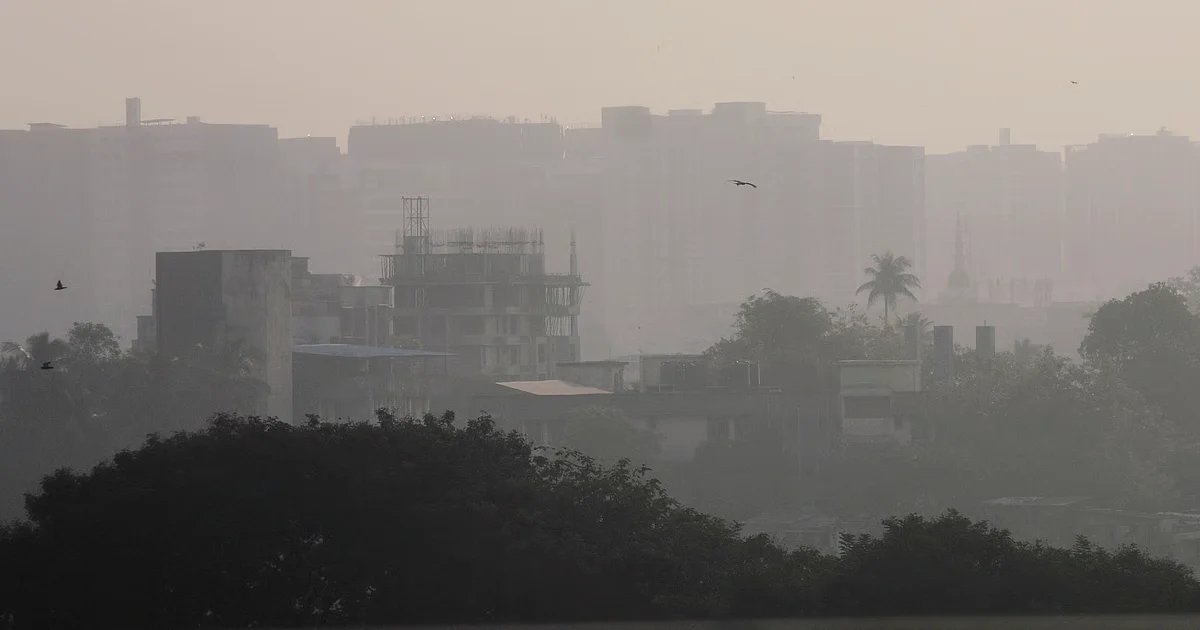
Delhi recorded its coldest day of the season so far on Thursday, with the minimum temperature dropping to 9 degrees Celsius, while the maximum temperature also remained at the season’s lowest level. The national capital’s air quality continued to remain in the ‘poor’ category for the 12th consecutive day, with an Air Quality Index (AQI) of 224.
The minimum temperature at Safdarjung, Delhi’s base weather station, settled at 9 degrees Celsius, 2.3 degrees below normal, while the maximum temperature was recorded at 27.2 degrees Celsius, 0.5 degrees above normal.
The maximum temperature matched the reading recorded on November 24, making it the joint-lowest maximum temperature of the season so far.
𝗔𝗶𝗿 𝗾𝘂𝗮𝗹𝗶𝘁𝘆 𝗿𝗲𝗺𝗮𝗶𝗻𝘀 𝗽𝗼𝗼𝗿 𝗳𝗼𝗿 𝟭𝟮𝘁𝗵 𝘀𝘁𝗿𝗮𝗶𝗴𝗵𝘁 𝗱𝗮𝘆
Of the 55 air quality monitoring stations that recorded data on Thursday, 40 reported ‘poor’ air quality, 14 recorded ‘moderate’ air quality and one reported ‘very poor’ conditions.
ITO was the only monitoring station to record air quality in the ‘very poor’ category.
Delhi’s overall AQI stood at 227 on November 24 before improving marginally to 220 on November 25 and subsequently rising to 224 on Thursday.
According to the Central Pollution Control Board (CPCB), an AQI between zero and 50 is considered ‘good’, 51 and 100 ‘satisfactory’, 101 and 200 ‘moderate’, 201 and 300 ‘poor’, 301 and 400 ‘very poor’, and 401 and 500 ‘severe’.
𝗩𝗲𝗵𝗶𝗰𝘂𝗹𝗮𝗿 𝗲𝗺𝗶𝘀𝘀𝗶𝗼𝗻𝘀, 𝗯𝗶𝗼𝗺𝗮𝘀𝘀 𝗯𝘂𝗿𝗻𝗶𝗻𝗴 𝗮𝗺𝗼𝗻𝗴 𝗺𝗮𝗷𝗼𝗿 𝗽𝗼𝗹𝗹𝘂𝘁𝗲𝗿𝘀
According to real-time source apportionment estimates for Thursday, secondary organic aerosols emerged as the largest contributor to Delhi’s PM2.5 pollution, accounting for 24.8 per cent of the estimated pollution load.
These aerosols are formed when gases emitted by sources such as vehicles and industries undergo chemical reactions in the atmosphere, resulting in the formation of fine particulate matter.
Vehicular emissions accounted for 20.6 per cent of PM2.5 pollution, followed by biomass burning at 19.7 per cent, secondary inorganic pollutants at 12.5 per cent and waste burning at 11.4 per cent.
Road dust, soil and mineral sources contributed 4.5 per cent, industrial emissions 2.7 per cent, coal combustion 1.6 per cent, firecrackers 1.4 per cent and mixed combustion 0.6 per cent.
𝗔𝗶𝗿 𝗾𝘂𝗮𝗹𝗶𝘁𝘆 𝗹𝗶𝗸𝗲𝗹𝘆 𝘁𝗼 𝘄𝗼𝗿𝘀𝗲𝗻 𝗳𝗿𝗼𝗺 𝗡𝗼𝘃𝗲𝗺𝗯𝗲𝗿 𝟮𝟴
According to the India Meteorological Department’s (IMD) Air Quality Early Warning System, Delhi’s air quality is expected to remain in the ‘poor’ category through November 27 before deteriorating to the ‘very poor’ category on November 28 and 29.
The outlook for the subsequent six days indicates that air quality is likely to fluctuate between the ‘poor’ and ‘very poor’ categories.
Meteorological conditions are also expected to become increasingly unfavourable for the dispersion of pollutants.
The maximum mixing depth was predicted at 1,350 metres on November 26, declining to 1,050 metres on November 27 and 28 before increasing marginally to 1,150 metres on November 29.
Mixing depth refers to the height up to which atmospheric pollutants can disperse. A lower mixing depth restricts vertical dispersion, allowing pollutants to accumulate closer to the ground.
The ventilation index, another indicator of the atmosphere’s capacity to disperse pollutants, was forecast to decline sharply from 4,500 square metres per second on November 26 to 1,200 square metres per second on November 27.
It is expected to rise marginally to 1,300 square metres per second on November 28 and 2,500 square metres per second on November 29.
According to the IMD, a ventilation index below 6,000 square metres per second, combined with an average wind speed of less than 10 kilometres per hour, creates unfavourable conditions for pollutant dispersion.
𝗧𝗲𝗺𝗽𝗲𝗿𝗮𝘁𝘂𝗿𝗲𝘀 𝗱𝗶𝗽 𝗮𝗰𝗿𝗼𝘀𝘀 𝘁𝗵𝗲 𝗰𝗮𝗽𝗶𝘁𝗮𝗹
Several other weather stations across Delhi also recorded below-normal minimum temperatures on Thursday.
Palam recorded a minimum temperature of 9.9 degrees Celsius, two degrees below normal, and a maximum of 24.4 degrees Celsius, 2.1 degrees below normal.
Lodhi Road recorded a minimum temperature of 9.4 degrees Celsius, 0.6 degrees below normal, while its maximum temperature settled at 27.2 degrees Celsius, 1.2 degrees above normal.
The Ridge recorded a minimum temperature of 11.4 degrees Celsius and a maximum of 26.4 degrees Celsius, both below normal.
At Ayanagar, the minimum temperature settled at 10.5 degrees Celsius, 2.5 degrees below normal, while the maximum temperature was recorded at 27 degrees Celsius, marginally above normal.
About the Author