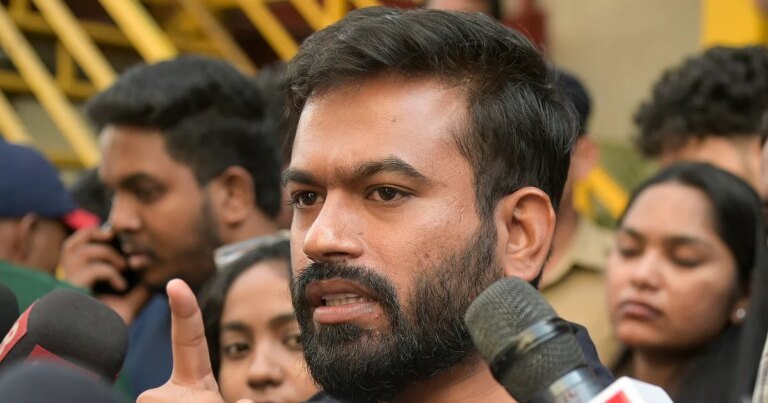
CJP’s Dipke accuses govt of ‘fostering religious divisions to divert attention from real issues’
 The Apna Chhattisgarh
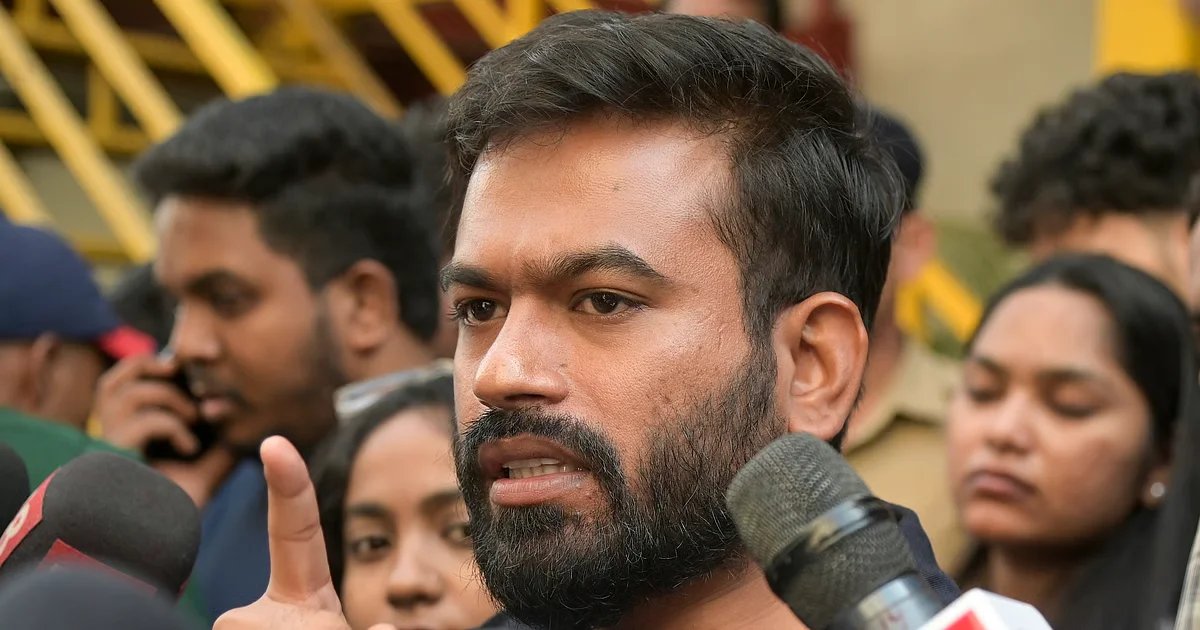
Cockroach Janta Party (CJP) convenor Abhijeet Dipke on Sunday accused the government of encouraging religious and caste divisions to divert public attention from livelihood issues, while raising allegations of “vote theft” and the poaching of elected representatives.
Addressing a gathering in Panaji in the presence of CJP leaders Saurav Das and Ashutosh Ranka, Dipke appealed to citizens to look beyond religious and caste identities and hold the government accountable for problems affecting their daily lives.
He said the CJP was committed to bringing people together and restoring what he described as India’s social fabric, rooted in the ideals of Mahatma Gandhi, Jawaharlal Nehru and B R Ambedkar.
“Citizens should always maintain their ability to think as citizens. When they take away that ability and force you to think as a Hindu, Muslim or Christian, you stop focusing on the real issues that affect your daily livelihood. You stop questioning the government, which is responsible for those issues,” Dipke said.
𝐂𝐉𝐏 𝐜𝐚𝐥𝐥𝐬 𝐟𝐨𝐫 𝐮𝐧𝐢𝐭𝐲
Alleging that religious and caste divisions were being used by political parties to retain power, Dipke said the CJP sought to unite people irrespective of their religion, caste, creed or political affiliations.
“CJP is here to unite India. CJP is here to reclaim the very social fabric of India, which was based on the ideas of Mahatma Gandhi, Pandit Jawaharlal Nehru and Dr Babasaheb Ambedkar,” he said.
The CJP convenor maintained that the organisation was not seeking political power or working to ensure the victory of any particular party.
“We are not here to get into power. We are not here to make any party win. What we really want to achieve is an India where Hindus, Muslims and Christians live together and everybody can practise their faith without any discrimination,” he added.
𝐃𝐢𝐩𝐤𝐞 𝐫𝐚𝐢𝐬𝐞𝐬 ‘𝐯𝐨𝐭𝐞 𝐭𝐡𝐞𝐟𝐭’ 𝐚𝐥𝐥𝐞𝐠𝐚𝐭𝐢𝐨𝐧𝐬
Questioning what he described as the erosion of democratic principles, Dipke referred to political developments in Goa following the 2017 Assembly elections.
He alleged that elected representatives switching political allegiances to facilitate government formation undermined the electoral mandate.
“Today, everybody is talking about vote theft. In Goa, they stole MLAs. It started with the stealing of MLAs in Goa, which has now led to the issue of vote theft,” he claimed.
Dipke also questioned those who accused the CJP of acting unconstitutionally, asking them to explain how the movement of elected representatives between parties for government formation could be justified.
His remarks linked the controversy over political defections with broader allegations concerning electoral integrity. The claims were made by Dipke during his address.
𝐋𝐚𝐧𝐝 𝐚𝐧𝐝 𝐞𝐧𝐯𝐢𝐫𝐨𝐧𝐦𝐞𝐧𝐭𝐚𝐥 𝐜𝐨𝐧𝐜𝐞𝐫𝐧𝐬
Turning to local issues, Dipke accused politicians and builders of working together to acquire land belonging to Goan communities, warning that large-scale construction could threaten the state’s environment, traditions and cultural identity.
He questioned the proposed 130-acre township project in Karapur, asking why luxury developments were being prioritised over essential infrastructure such as schools, colleges and hospitals.
Dipke also raised concerns about water scarcity, alleging that the proposed development could place additional pressure on groundwater resources in an area already facing shortages.
He demanded the repeal of Section 39A of the Goa Town and Country Planning Act, claiming that the provision threatened the land rights of local communities.
Section 39A empowers the Chief Town Planner to modify land-use zoning for specific plots following a notification and public objection process.
Dipke appealed to civil society organisations and members of the legal fraternity to support the campaign against the provision.
𝐏𝐫𝐢𝐨𝐫𝐢𝐭𝐲 𝐟𝐨𝐫 𝐆𝐨𝐚𝐧 𝐲𝐨𝐮𝐭𝐡
The CJP convenor also questioned whether local communities were receiving adequate economic benefits from Goa’s tourism industry.
“Goan youth are not receiving an adequate share of the benefits generated by the state’s tourism industry. Local youth should be given priority in tourism-related businesses and employment,” he said.
Dipke argued that development policies should protect local livelihoods while ensuring that residents benefit from economic activity in the state.
Recalling the solidarity shown by people in Goa during the CJP’s protests at Jantar Mantar in New Delhi, he urged citizens to stand against injustice even when those affected were strangers to them.
He said collective action across regional, religious and political differences was essential to addressing public grievances and protecting citizens’ rights.
About the Author