‘Infrastructure push has brought Northeast closer to Delhi’, says Amit Shah
 The Apna Chhattisgarh
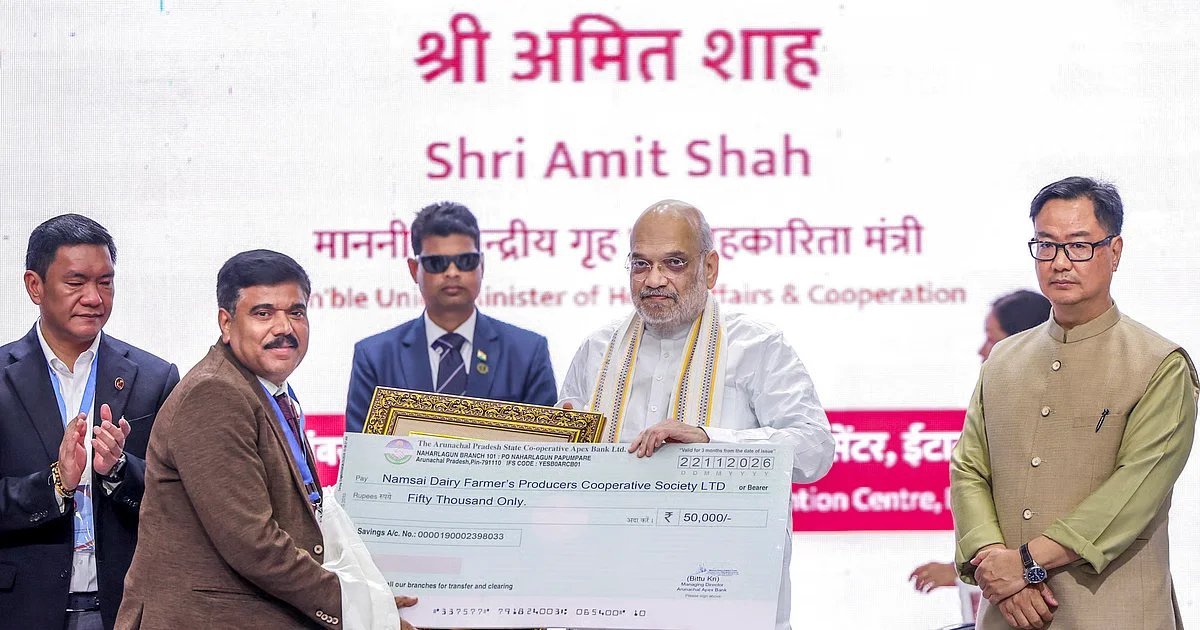
Union Home Minister Amit Shah on Sunday said the Centre’s sustained infrastructure push over the past 12 years had significantly narrowed the development and connectivity gap between the Northeast and New Delhi, with Arunachal Pradesh witnessing major improvements in transport, education, employment and economic opportunities.
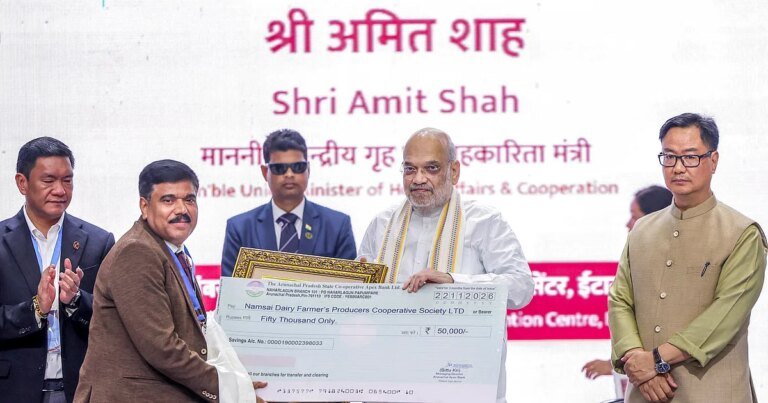
Addressing the ‘Sahakarita Samaroh’ at the Dorjee Khandu Convention Hall in Itanagar, Shah said the Narendra Modi government had placed the Northeast at the centre of its development agenda, bringing the region closer to the country’s economic mainstream through improved roads, railways and air connectivity.
He accused the previous Congress-led United Progressive Alliance (UPA) government of neglecting Arunachal Pradesh and providing inadequate financial assistance during its tenure.
Shah claimed that central assistance to Arunachal Pradesh had increased from ₹33,530 crore during 2004–2014 under the UPA government to ₹1,64,664 crore between 2014 and 2024 under the National Democratic Alliance (NDA).
According to the minister, tax devolution to the state had increased fourfold, while grants had risen 18-fold. He said Arunachal Pradesh’s annual budget had expanded from ₹12,000 crore to ₹36,000 crore.
𝐏𝐫𝐨𝐣𝐞𝐜𝐭𝐬 𝐰𝐨𝐫𝐭𝐡 ₹𝟓,𝟔𝟏𝟎 𝐜𝐫𝐨𝐫𝐞
During the programme, Shah launched development initiatives worth approximately ₹5,610 crore, covering education, power, rural roads and infrastructure in border villages.
The projects included Mission Shikshit Arunachal Phase II, with an allocation of ₹1,500 crore, along with power and rural road development programmes worth ₹2,000 crore each.
He also launched 199 projects under the Vibrant Villages Programme, involving an investment of ₹110.95 crore across 11 border districts.
Highlighting the programme, Shah said Prime Minister Modi had changed the perception of settlements along India’s international borders by describing them as the country’s “first villages” rather than its last.
He claimed that improved infrastructure, electricity, schools and livelihood opportunities had encouraged residents to return to nearly 40 border villages in Arunachal Pradesh.
The home minister also referred to major infrastructure initiatives, including the 2,880 MW Dibang hydropower project involving an investment of approximately ₹32,000 crore, the Balipara-Charduar-Tawang road and the Nechiphu tunnel.
Shah said he had discussed the possibility of introducing a second daily flight between Itanagar and New Delhi with an airline following a request from Chief Minister Pema Khandu.
𝐂𝐨𝐨𝐩𝐞𝐫𝐚𝐭𝐢𝐯𝐞𝐬 𝐭𝐨 𝐝𝐫𝐢𝐯𝐞 𝐫𝐮𝐫𝐚𝐥 𝐠𝐫𝐨𝐰𝐭𝐡
Shah unveiled the Arunachal Pradesh Cooperative Vision Document 2047, aimed at strengthening rural livelihoods, encouraging entrepreneurship and promoting economic self-reliance.
Describing cooperatives as central to the state’s economic future, he said the sector could generate employment and improve incomes, particularly for farmers, women and young people.
According to Shah, more than 50,000 people were associated with 185 primary agricultural credit societies, 52 dairy cooperatives and 43 fish farms.
He urged the Arunachal Pradesh government to prepare a comprehensive dairy development roadmap in collaboration with the National Dairy Development Board (NDDB).
The minister assured procurement support from Amul and the NDDB to strengthen dairy production and provide market access to local producers.
Shah also highlighted the contribution of women-led cooperatives supplying locally produced vegetables, milk, eggs and agricultural commodities to the Army and the Indo-Tibetan Border Police.
He said these initiatives were reducing dependence on supplies from neighbouring Assam while creating economic opportunities within Arunachal Pradesh.
The home minister suggested developing fisheries in hydropower reservoirs to generate additional employment and strengthen the rural economy.
𝐖𝐞𝐥𝐟𝐚𝐫𝐞 𝐬𝐜𝐡𝐞𝐦𝐞𝐬 𝐡𝐢𝐠𝐡𝐥𝐢𝐠𝐡𝐭𝐞𝐝
Listing the Centre’s welfare initiatives, Shah said 1.28 lakh farmers in Arunachal Pradesh had benefited from the PM-KISAN scheme, while 2.30 lakh households had received tap water connections.
He said 1.90 lakh people had obtained health coverage of up to ₹5 lakh and approximately 45,000 beneficiaries had received housing assistance.
Shah maintained that the combination of infrastructure development, social welfare programmes and cooperative institutions would help accelerate economic development in the state.
Chief Minister Pema Khandu, who attended the programme, said approximately 1,100 cooperative societies were contributing to Arunachal Pradesh’s rural economy.
He expressed confidence that the newly launched projects would support more inclusive and balanced development across the state.
Union Minister Kiren Rijiju emphasised the importance of technological advancement and investment, while Deputy Chief Minister Chowna Mein called for strengthening cooperative institutions and making them financially sustainable.
𝐍𝐞𝐰 𝐢𝐧𝐢𝐭𝐢𝐚𝐭𝐢𝐯𝐞𝐬 𝐥𝐚𝐮𝐧𝐜𝐡𝐞𝐝
During the event, Shah inaugurated a foodgrain warehouse at Raga LAMPS and launched an e-commerce platform for products associated with the Arunachal State Rural Livelihoods Mission.
He also flagged off a mobile medical unit intended to improve healthcare access in remote areas, inaugurated the SARAS Mela and felicitated four cooperative institutions for their contributions to rural development.
Shah arrived in Arunachal Pradesh on Friday for a three-day visit, during which he also reviewed development projects and security-related matters in the state.
The home minister said continued investment in connectivity, border infrastructure and cooperative institutions would be important for sustaining Arunachal Pradesh’s economic development and strengthening its integration with the rest of the country.
About the Author