India and China hold fresh military talks in Arunachal to ease tensions ahead of winter
 The Apna Chhattisgarh
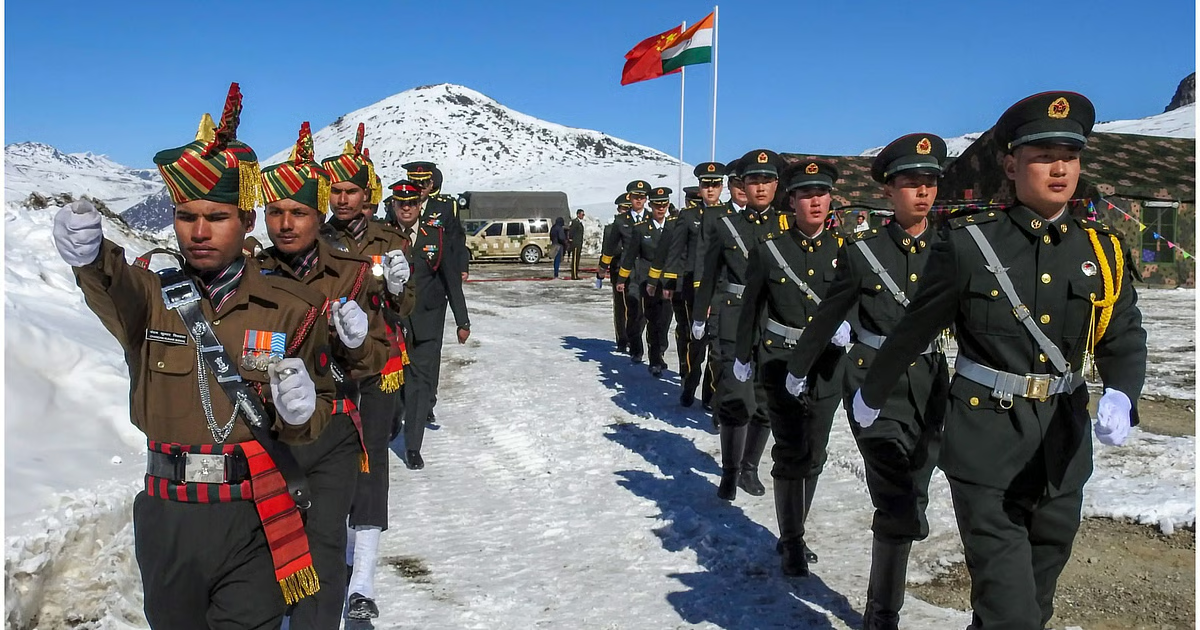
India and China have concluded another round of high-level military discussions along their disputed frontier in Arunachal Pradesh, as the two sides seek to prevent local confrontations from escalating and reduce tensions before the onset of severe winter conditions.
The latest talks were led by Lieutenant General Girish Kalia, General Officer Commanding of the Indian Army’s III Corps, also known as the Spear Corps. The formation is headquartered at Rangapahar near Dimapur in Nagaland.
Kalia met his Chinese counterpart and other military officers during the engagement. An official from the Ministry of External Affairs (MEA) was also present.
The discussions focused on establishing clear protocols for engagement between the two militaries, preventing friction between patrol parties, maintaining communication channels and ensuring that local face-offs do not develop into a larger military standoff.
Talks continue amid tensions along the LAC
The latest meeting comes against the backdrop of continuing tensions at several points along the Line of Actual Control (LAC) in Arunachal Pradesh, where Indian and Chinese troops have reportedly faced off at multiple locations.
Both sides have deployed substantial numbers of personnel in the region. The difficult terrain and extreme weather conditions expected during winter are likely to add to the operational and logistical challenges of maintaining troops along the mountainous frontier.
The discussions are part of efforts by the two countries to manage differences through established military communication mechanisms, particularly in areas where their respective perceptions of the LAC do not coincide.
Second round follows September engagement
The latest engagement follows the first Corps Commander-level talks in the eastern sector, held on September 6 and 7 at the Wacha-Damai border personnel meeting points.
Wacha, located in the Kibithoo sector of Arunachal Pradesh, is India’s easternmost designated Border Personnel Meeting Point. The September discussions were held amid reports of heightened tensions in the Taksing area of Upper Subansiri district.
The first meeting took place at Wacha on the Indian side, while the subsequent session was held at Damai on the Chinese side. The engagement marked the introduction of Corps Commander-level talks in the eastern sector, a mechanism previously established in the western sector following the 2020 Galwan clash.
The military formations operating in the strategically important eastern sector are part of the Indian Army’s III Corps, which is responsible for a significant stretch of the frontier in Arunachal Pradesh.
ITBP chief had confirmed face-offs at several locations
The continuing tensions came into sharper focus after Shatrujeet Kapur, who retired as Director General of the Indo-Tibetan Border Police (ITBP), acknowledged that Indian and Chinese troops had faced off at multiple locations along the Arunachal Pradesh frontier.
Speaking to ITBP personnel at an event in Alwar, Rajasthan, on October 22, Kapur said the confrontations had occurred at several points and were continuing. His remarks, reported on October 31, drew renewed attention to the situation in the eastern sector.
The developments come as India and China continue efforts to stabilise relations following the military confrontation in eastern Ladakh in 2020.
The MEA has said that the situation along the LAC is periodically disturbed when Chinese forces move away from established patrolling patterns. It has maintained that peace and tranquillity in the border areas are essential for the overall development of bilateral relations.
India has also consistently opposed any unilateral attempt to alter the status quo along the LAC.
Why Arunachal Pradesh remains a sensitive frontier
The boundary dispute in Arunachal Pradesh stems from China’s rejection of the McMahon Line, which India recognises as the boundary between the two countries in the eastern sector.
The line was drawn under the 1914 Simla Convention involving British India, Tibet and China. Representatives of British India and Tibet signed the agreement, but China later repudiated it.
Beijing claims Arunachal Pradesh as part of a region it calls Zangnan, or South Tibet. New Delhi rejects the claim and maintains that Arunachal Pradesh is an integral and inalienable part of India.
Differences in the two countries’ perceptions of the LAC have repeatedly led to confrontations between patrol parties in areas where the boundary remains unsettled.
Arunachal Pradesh Chief Minister Pema Khandu has also acknowledged that transgressions continue along the frontier.
“Transgression has definitely happened. It continues to happen. Such behaviour is not new, as the border is not defined,” Khandu said, describing the situation as normal and asserting that Indian armed forces were effectively guarding the frontier.
He also cited China’s refusal to accept the McMahon Line as a key reason for recurring confrontations.
Diplomatic efforts to stabilise ties
The latest military engagement follows a series of diplomatic initiatives aimed at easing tensions and advancing discussions on the boundary question.
In August, National Security Adviser Ajit Doval and Chinese Foreign Minister Wang Yi met in Beijing in their capacity as special representatives for the boundary negotiations. The meeting formed part of the broader effort to resolve outstanding issues and maintain peace along the frontier.
The two countries have increasingly relied on military and diplomatic communication channels to prevent localised incidents from escalating, particularly in areas where the LAC remains disputed.
Relations between India and China have been strained since the deadly clash in the Galwan Valley in June 2020, one of the most serious military crises between the two countries in decades.
While subsequent talks have helped ease tensions in parts of the western sector, the eastern frontier remains sensitive.
Former Chief of Defence Staff General Anil Chauhan has previously highlighted the unsettled boundary, differing perceptions of the LAC, infrastructure development and the deployment of force multipliers as factors that could trigger friction.
He has emphasised the need for vigilance, credible military capabilities, clear agreements and consistent adherence to existing understandings.
The latest round of talks is therefore part of a continuing effort to prevent face-offs along the Arunachal Pradesh frontier from turning into wider confrontations. However, with no mutually agreed boundary in place, the possibility of friction remains.
About the Author