Delhi AQI rises to 286, forecast warns of another pollution spell ahead | India News
 The Apna Chhattisgarh
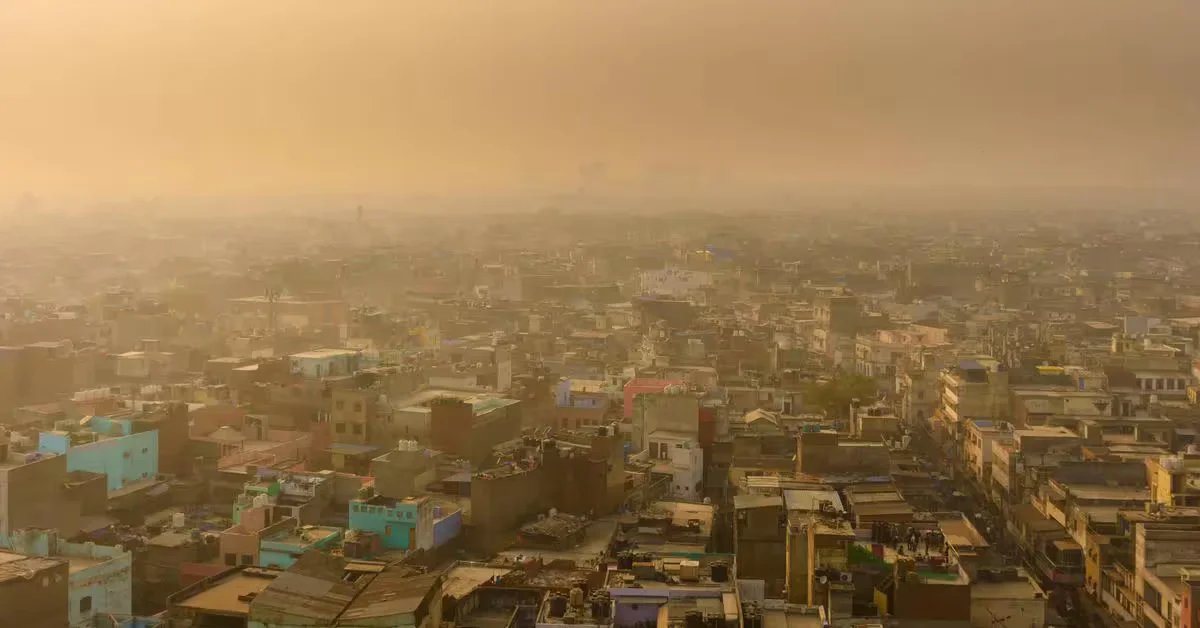
Delhi’s air quality deteriorated on Thursday, with the city-level Air Quality Index (AQI) rising to 286 at 7 am, placing it in the ‘poor’ category, according to the Central Pollution Control Board’s (CPCB’s) real-time data. The prominent pollutant remained PM2.5.
The increase was visible across the capital’s monitoring network. Of the 57 stations with valid readings at 7 am, 55 recorded AQI levels above 200, while 20 were in the ‘very poor’ category, with readings above 300. None reported ‘severe’ air quality.
Pusa, monitored by the Indian Institute of Tropical Meteorology (IITM), recorded the highest station-level AQI at 366. It was followed by Jawaharlal Nehru University (JNU) at 362, Sirifort at 358, NSUT Jaffarpur at 355 and ITO at 354. Commonwealth Sports Complex recorded 347, while CRRI Mathura Road and Chandni Chowk reported 344 each.
At the other end, Cantonment Area recorded the lowest AQI at 179, followed by Lodhi Road at 180. Both were in the ‘moderate’ category.
Delhi government steps up pollution checks
The deterioration comes as the Delhi government prepares for another spell of worsening air quality. Chief Minister Rekha Gupta on Wednesday directed department heads to intensify field inspections, strengthen enforcement and ensure that dust-control measures are followed.
The government reviewed pollution hotspots, road dust, construction activity, vehicular emissions, industrial pollution and waste management at a meeting held at the Delhi Pollution Control Committee’s Integrated Command and Control Centre. Secretary-level officers have been appointed as nodal officers for all 13 districts to monitor pollution-control measures, with directions to conduct ground inspections twice a week.
The Indian Institute of Tropical Meteorology (IITM) has forecast that Delhi’s AQI could deteriorate into the ‘very poor’ category by Friday and remain there over the weekend.
Farm fires rise across northern states
Farm-fire incidents across northern states also increased on Wednesday. Data maintained by the Indian Agricultural Research Institute (IARI) showed 772 fires were reported, more than 30 per cent higher than Tuesday’s count.
Madhya Pradesh reported 370 incidents, followed by Punjab at 202, Uttar Pradesh at 109, Rajasthan at 59 and Haryana at 30. Since September 15, the states have recorded 14,944 farm-fire incidents, including 6,718 in Punjab.
NCR cities continue to report poor air quality
Air quality across the National Capital Region (NCR) remained poor, with Greater Noida recording the highest AQI among the neighbouring cities at 277. Gurugram reported 273, Manesar 272, Bhiwadi 270 and Bahadurgarh 269.
Rohtak recorded an AQI of 249, while Noida stood at 240 and Ghaziabad at 222. Baghpat reported 213 and Faridabad 206. Meerut was at 200, while Bulandshahr and Alwar recorded 172 and 162, respectively. Sonipat reported 153, Panipat 129, Palwal 124 and Hapur 118.
Ballabgarh most polluted city in CPCB list
Among the 284 cities with valid readings in the CPCB’s 7 am dataset, Ballabgarh in Haryana recorded the highest AQI at 313. Hisar in Haryana and Gummidipoondi in Tamil Nadu followed at 301 each. Bhiwani in Haryana recorded 299.
Aizawl in Mizoram recorded the lowest AQI at 14, followed by Eloor in Kerala at 30 and Shillong in Meghalaya at 34. Leh in Ladakh and Samastipur in Bihar both recorded 41. Kalaburagi in Karnataka, Nellore in Andhra Pradesh and Rupnagar in Punjab reported 42 each.
Under the CPCB’s National Air Quality Index classification, readings between 0 and 50 are categorised as ‘good’, 51 and 100 as ‘satisfactory’, 101 and 200 as ‘moderate’, 201 and 300 as ‘poor’, 301 and 400 as ‘very poor’, and 401 and 500 as ‘severe’.
Stage I and II measures under the Graded Response Action Plan (Grap) remain in force across Delhi-NCR. The Commission for Air Quality Management (CAQM) has also retained separate restrictions on dust-generating demolition and outdoor construction activities, along with directions on physical office attendance, under its October 30 order. These measures are scheduled to remain in force until November 20.
About the Author